Ending America's ‘Forever War’ on Wildfire
Many have dubbed the ongoing, prolonged military conflicts that litter the present political climate as “forever wars.” Most Americans are fed up with these perpetual conflicts, often started with empty promises from politicians and ending in massive numbers of lives lost and widespread destruction.
While these foreign “forever wars” can last decades, this is not the case with the “forever war” being waged on our home soil against the nation's public lands: the government's century-long war against wildfire.
This futile and exhausting campaign of exclusive and aggressive suppression is misinformed and dangerous for the wildland firefighters who already put their lives on the line to protect our forests and communities.
Declaring the War on Wildfire: How We Got Here
The militarization and misdirection of the U.S. response to wildfire truly took off in 1935, when the U.S. Forest Service issued its “10 AM Policy.” This policy was the nearest thing to a formal declaration of war against wildfire, which sought to encircle and extinguish every wildfire by the morning after a wildfire's detection.
The 10 AM Policy was powered first by the new, large pool of laborers from the Civilian Conservation Corps, which led to a bigger and more coordinated workforce in public lands, and then by the mass quantities of surplus military vehicles and equipment brought to firefighting after World War II and the Korean War.
Historians commonly refer to this as the "post-war" period; however, while international war died down, the war on wildfire had a dramatic surge.
For a period of time, the tactic of aggressive suppression worked to reduce wildfires. By the mid-1950s, the number of acres burned by wildfires had crashed to as low as one million acres in a single year, far below the average annual acreage of 30 million acres that burned during the 1930s. This short-lived success of wildfire suppression was made possible by the environmental conditions of the time, as well as a pattern of aggressive initial attack followed by siege-like suppression campaigns against the few rare wildfires that grew large and required extended attack. For a while, it seemed that the federal government was winning the war on wildfire and perhaps could extirpate fire from the landscape, as it had done with large predators like grizzly bears and wolves.
The Current Conditions of Wildfire Suppression
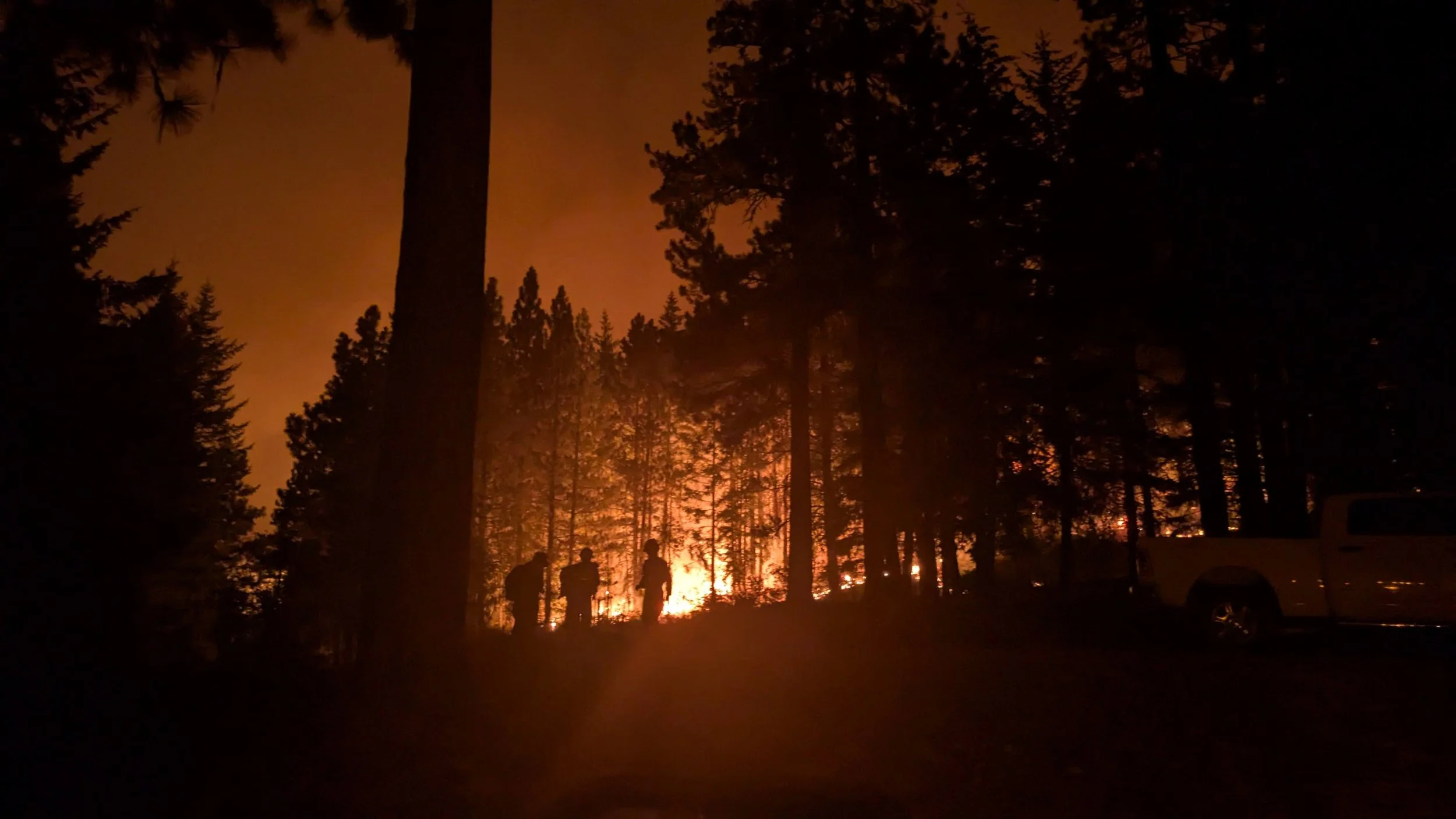
Photo credit: Matt Nunnelly
However, as we now know, nature plays the long game, and a war against Earth is impossible to win. While crews may win battles, this “forever war” is an endless and ultimately unwinnable war that returns every year with escalating fury. A cold realization has settled within much of the wildland fire community that all of that "successful" wildfire suppression and the exclusion of prescribed fire are now leaving a tinderbox of unburnt fuels and extreme conditions, leading to the firefighting failures of the present.
This is the "wildfire paradox" that is prompting a radical rethinking of our relationship to fire and the land, compelling us to develop new measures of success while redefining what fire suppression is or should be.
Under climate change and decades of suppression, the environmental conditions of fuel accumulation, extreme heat, and serious drought are making for an extremely active wildfire year. A surge of wildfire activity that began in early spring in the Southeast has been migrating through the Great Plains states and is now entering western regions. These conditions warrant extra caution in the use of fire and prompt action in response to wildfire ignitions that have the potential to spread fast and grow big. But in responding to wildfire ignitions, initial actions do not need to be an initial attack.
Unfortunately, this understanding and the understanding of the “wildfire paradox” have not yet reached politicians or agency leaders who seem ever more committed to waging war on wildfire.
Case in point: the Trump Administration has doubled down on obsolete, unsustainable fire exclusion policies and conventional firefighting strategies. This spring, both the Secretary of Agriculture and the Secretary of the Interior have issued directives mandating full suppression of every wildfire on federal lands, along with new restrictions on prescribed burning for the entirety of this year. The Trump Administration's Republican allies in Congress are also proposing a "24-Hour Rule,” eerily similar to the “10 AM Policy,” requiring all wildfires to be extinguished within a day. These utterly retrogressive decreed policies and proposed laws are a throwback to the 1950s – as if we could mandate those same cooler climatic conditions of that decade, too.
A Shrinking Wildland Fire Workforce
Bizarrely, at the same time that wildfire activity is surging, the federal wildland fire workforce is shrinking. This has been an ongoing trend in recent years as the miserable pay and working conditions for federal firefighters have made agencies like the USFS unable to recruit enough young workers or retain older, experienced workers to fully staff fire crews and management teams. But this trend exploded into a crisis when the Trump Administration defunded federal agencies and downsized the federal workforce.
Beginning with the actions of Trump's misnamed Department of Government Efficiency (DOGE), headed by Elon Musk, thousands of federal employees were suddenly terminated or coerced into early retirement in the spring of 2025. Federal agencies lost hundreds of workers who served in the "fire militia": they were collateral-duty wildland firefighters, or they provided vital support roles in fire camps. When the Administration realized the absurd folly of the DOGE downsizing debacle in shredding the ranks of wildland firefighters, it tried to reverse course by begging workers to come back, but failed to assure them that they would have job security. Over 6,000 fire workers are now gone on account of DOGE's dastardly misdeeds.
Federal fire agencies have not recovered from these mass job losses, which aren’t just a loss of numbers but also a rapid "brain drain" of experienced, veteran firefighters, fire managers, and fire scientists. The Trump Administration is defensively claiming that it has met all of its hiring goals and firefighting crews are fully staffed this year, but that's a matter of damned lying. Not only did the Administration set diminishing goals, but there are still vacancies on many suppression crews. For example, an engine might qualify as "fully staffed" if there are two out of normally three crewmembers employed, but if one of those two gets injured or ill and cannot roll on a dispatch, that engine stays parked.
Now, under the suppression mandates, these understaffed and under-resourced fire crews are being dispatched to chase after all ignitions, no matter their location or conditions, no matter the values at risk or the probability of suppression success.
Standing Up for Crew Safety and Fire Science
Given the inherent safety risks and health hazards that are part of every suppression assignment, and considering the extreme environmental conditions that exist across much of the country, increasing firefighter exposure to these risks and hazards by aggressively attacking every ignition everywhere will predictably lead to inevitable failures if not tragedies, and in fact, it already has. Three young helitack firefighters were killed, and two others were severely injured while on an initial attack assignment of two small fires that later merged with the Snyder Fire on the Utah/Colorado border.
The whole wildland fire community is grieving these losses, while almost no specific information has been released to help understand how this tragedy happened. But the question for this and every other firefighting dispatch for the rest of this year (and beyond) must be "why?" Why was that crew sent to aggressively attack and fully suppress those fires? Answering the why question involves disclosing what the values at risk were, what the land management plan and goals were, and what their suppression objectives were in the context of multiple fires burning in the same area.
With the changing climate, the fire season is getting longer than ever, with even mid-winter fires breaking out across the country. We do not have an inexhaustible supply of crews, resources, and money to attack all fires everywhere all the time. Agencies are going to have to be more selective and strategic in where they put crews at risk.
Our suggestion, a simple set of criteria to guide strategic suppression choices for crews: 1) where will they be safest? 2) Where are they most needed to protect lives and property? 3) Where do they have a reasonable probability of success in managing fire for community protection or land stewardship objectives?
Decisionmakers and dispatchers need to be more discriminating, not less, to preserve the health and safety and conserve the energy of crews. They will be safer, most needed, and more likely to succeed when and where those criteria align if their safety and well-being remain a top priority.
Ultimately and inevitably, the "war on wildfire" paradigm will end because it cannot go on forever. The Trump Administration applying its penchant for militarism to fire management is only creating performative firefighting that is unsafe, unneeded, and knowingly futile.
This performativism must be stopped by a great refusal of fire crews unwilling to engage in it. Their courage to decline excessively dangerous, destructive, or simply dumb suppression assignments must be supported by the general public, who, in turn, must demand that protecting lives begins with caring for the lives of wildland firefighters.
It is the responsibility of the American people and the wildland firefighting workforce to put an end to this misinformed and dangerous forever war on wildfire. Managing fire and the land need to be a labor of love, not an act of war.