Will Prescribed Fire Practitioners Finally get Hazard Pay?
Public comment by FUSEE Board Member, Rich Fairbanks:
“I strongly support the Office of Personnel Management’s proposed rule to establish Hazardous Duty Pay (HDP) and Environmental Differential Pay (EDP) at a 25 percent rate for federal employees performing prescribed wildland fire activities. As someone who spent years on the fireline as a General Schedule seasonal firefighter conducting controlled burns, I can attest firsthand that this rulemaking is long overdue.
Personal Experience
In 1973, I was finishing my second year as a GS seasonal firefighter in California. After completing a technician’s degree in forestry, I asked the Fire Management Officer at McCloud Ranger District for career advice. He told me to go north, to the Olympic National Forest in Washington, where they were using prescribed burns to convert old-growth clearcuts to plantations and to reduce fire hazard. He said: “You will see more extreme fire behavior in a year of controlled burning than in a decade of fighting wildfires.” He was right.
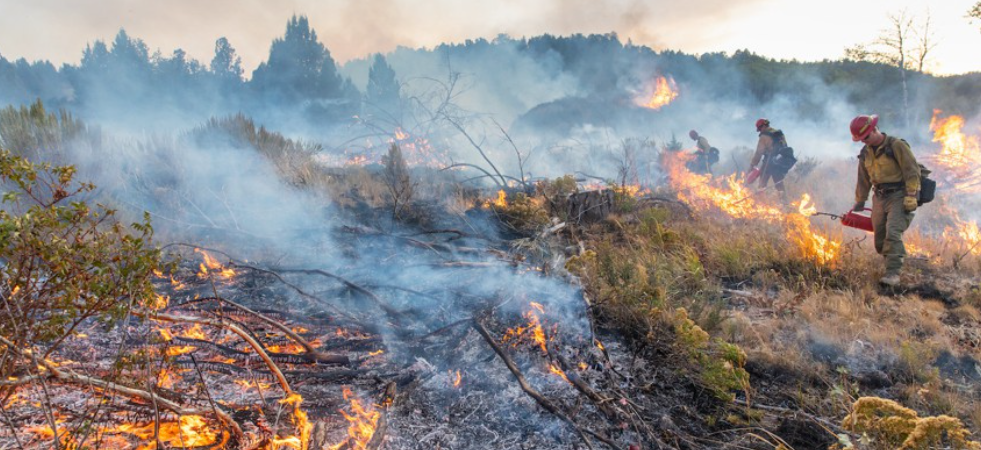
Source: Bureau of Land Management
From 1974 through 1980, I worked at Shelton and Hoodsport Ranger Districts on the Olympic National Forest. The hazards I encountered were real and severe:
I dodged rocks released by burning slash and rolling down 70 percent slopes. I watched two-ton root wads tumble downslope out of burning log landings.
Working in dense wood smoke was routine. I filed CA-1 injury reports on employees who suffered scratched corneas from hot, dense smoke exposure.
My crew and I ran for our lives after a burning block spontaneously ignited an adjacent unburned clearcut block, threatening to trap us between two simultaneous fires.
These are not hypothetical risks — they are the daily reality of prescribed fire work. The proposed rule’s own documentation acknowledges this, citing 2,142 smoke or inhalation exposure incidents recorded in Forest Service Safety reports from 2018 to 2023 alone, and 15 prescribed fire fatalities between 2003 and 2023.
A Decades-Old Pay Inequity
In approximately 1975, a crew foreman at Shelton Ranger District formally requested hazard pay for prescribed burning. The Office of Personnel Management denied the request, ruling that it was an “administratively controllable” hazard and therefore ineligible. I believe that determination was wrong then, and the proposed rule confirms it is wrong now.
After leaving the foreman job in 1980, I spent four years as a squad leader and foreman on Interagency Hotshot Crews — first on the Wenatchee IHC, then on the Mt. Hood IHC. In all that time on elite wildfire suppression crews, I never encountered conditions as dangerous as what I regularly experienced doing prescribed burning on the Olympic National Forest. Yet wildfire suppression qualified for hazard pay, and prescribed fire did not.
Why the “Administratively Controllable” Standard Was and Is Wrong
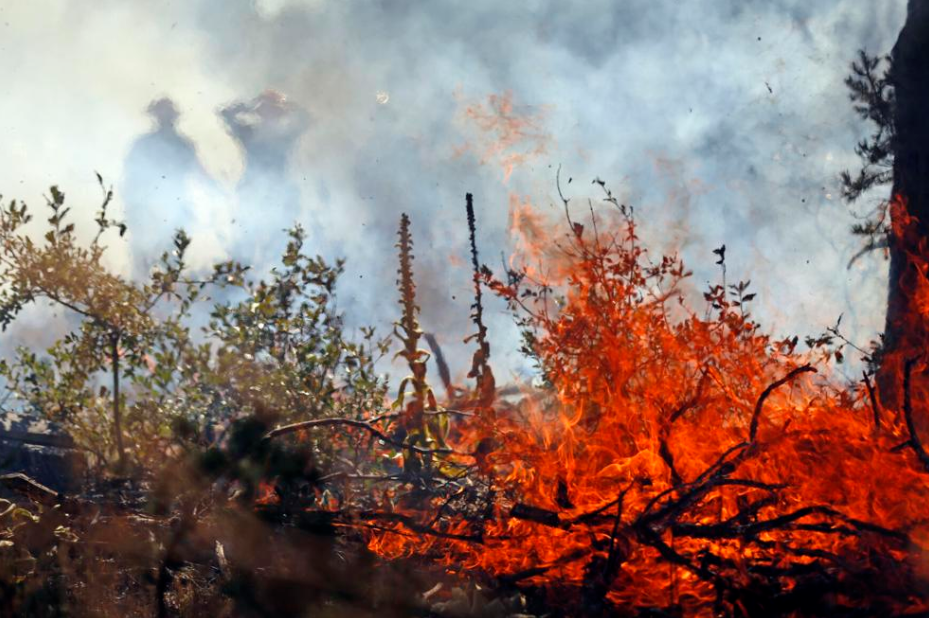
Source: Luis Sanchez Santurno/Santa Fe New Mexican
Fire is a chemical reaction mediated by fuels, weather, and topography. Fuels and topography present fixed and compounding physical hazards. Weather — particularly at the scale of an individual burn unit — is not reliably predictable. The proposed rule rightly recognizes this, stating that “any fire on the landscape can exceed intended boundaries and is never fully within human control,” and that “controlled fire” is a misnomer not recognized by the wildland fire community or federal policy since 1995.
Standard safety practices — PPE, briefings, lookouts, and checklists — reduce but cannot eliminate risk. The International Agency for Research on Cancer now classifies firefighter occupational smoke exposure as carcinogenic to humans. Congress has recognized this through presumptive illness coverage under the James M. Inhofe National Defense Authorization Act of 2023. The science, the injury data, and lived experience all support the same conclusion: prescribed fire work is hazardous work.
Conclusion
I urge OPM to finalize this rule without delay and without reducing the proposed 25 percent differential. Prescribed burning is essential to the health of fire-adapted ecosystems and to reducing catastrophic wildfire risk. The federal employees who perform this work face genuine, unavoidable hazards that are equivalent to those faced on wildfire suppression assignments. It is time to recognize that hazard in their pay — as this rule proposes to do — and to respect the labor and sacrifice of those who work on prescribed fires.”
Differential Pay for Prescribed Wildland Fire Activities