What the US Forest Service reorganization means for wildland fire
On March 31st, the Trump Administration announced that it would be “restructuring the USFS,” claiming the choice was to “prioritize common sense management.”
However, this ‘restructuring’ means eliminating over 50 research stations (nearly all of them), shutting down every single regional office and replacing them with newly-created state offices, and forcing the relocation of its headquarters from Washington, D.C. to Salt Lake City, Utah.
This isn’t restructuring or ‘common sense management,’ it’s dismantling a foundational agency for federal fire management and wildfire response.
This has come swiftly and with little to no analysis or input from stakeholders, communities, or Tribes, and it comes amid an increasingly severe drought and a record-breaking low snowpack year, with climate-change-induced wildfires being more likely than ever.
We foresee that this dismantling will have significant impacts on wildfire readiness and response.
Source: USFS
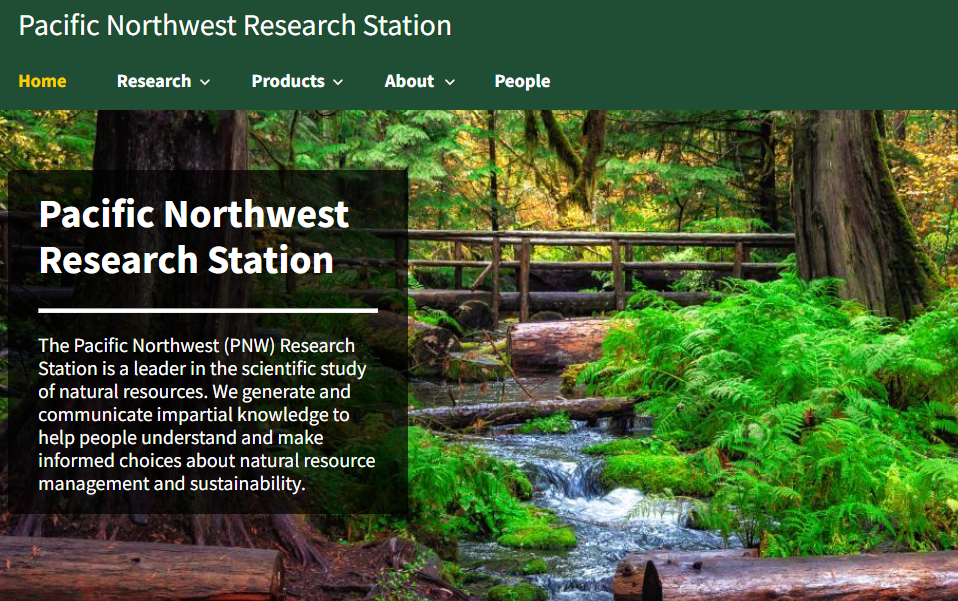
The loss of over 50 research stations will weaken our wildfire readiness.
Not only will we lose brilliant scientists doing significant and necessary research, but we will also lose important ecological knowledge about fire and climate change.
Many of these stations study fire behavior, forecast smoke dispersal, and help inform evacuation decisions. This research is necessary for ecological fire management and supports wildland firefighters in their response to high-intensity wildfires.
While the USFS will “consolidate” its research stations, ecological fire research is inherently place-based and can’t be replicated elsewhere.
The shuttering of regional offices will destabilize an important agency.
The closing of every single USFS regional office means the loss of important relationships with local Tribes and communities. These relationships inform important fire-related land stewardship decisions.
Though new state offices will be opened, relocation for many of the thousands of employees at these offices will not be possible, leading to the loss of experts when we need them the most.
The forced relocation of the USFS Headquarters fractures public land management.
The Administration claims this “reorganization” will streamline operations, but isolating the national headquarters of the USFS from the rest of the decision-makers in D.C. does not serve to “streamline” the USFS’s work.
Alongside this, moving the headquarters of an agency that manages national lands to Utah is a red flag for increased logging. Utah is the “beating heart” of the anti-public-lands movement; the state is currently suing the federal government to seize control of 18.5 million acres of public land.
All of this leads to further destabilization of an agency that manages 193 million acres of national forest during what’s likely to be a high-intensity wildfire season.
What does the USFS reorganization mean for firefighters?
Source: USFS
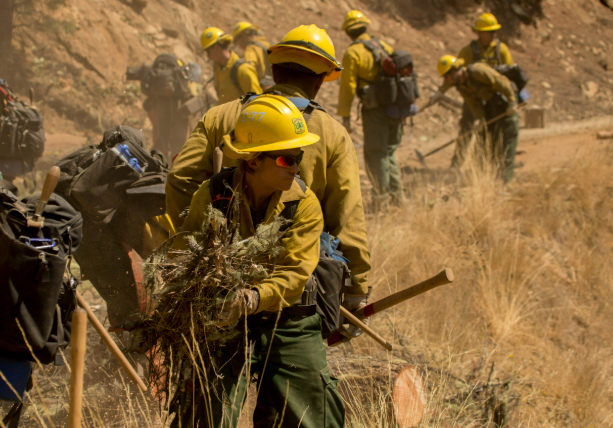
With the dismantling of the USFS, alongside the consolidation of federal fire agencies, we worry about unstable structures leading to unsupported firefighters.
What could have been a season of transformation, focusing on increased collaboration and coordination among agencies, instead will be a season of a new federal fire agency just getting on its feet, without the support of a stable USFS. We worry about how this will impact wildland firefighters on the ground, who have historically relied on this coordination and collaboration to succeed.
The Administration’s hasty decision-making and the destruction of pre-existing wildland fire structures may significantly reduce our ability to respond to and prepare for a high-intensity fire season.
We urge you to watch out for the red herring this fire season. We predict that the Trump Administration will use these wildfires as a scapegoat to increase logging and extraction in our national forests. But, logging does not solve the climate-change-induced wildfire crisis; ecological fire management and a return to Indigenous ways of relating to and respecting fire are our best hopes for a new fire paradigm.