Sue Husari: A Life in Fire, Leadership, and Care — Women’s History Month Spotlight
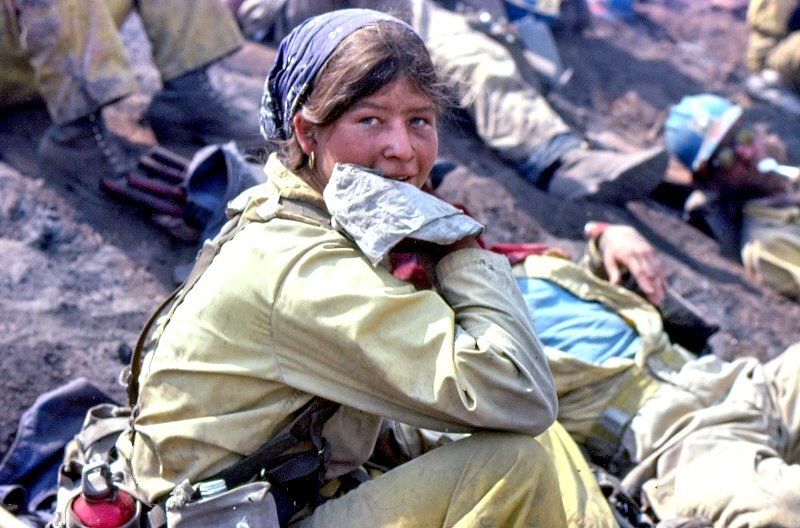
Sue Husari on a wildland fire crew.
In a field long defined by grit, endurance, and tradition, Sue Husari has spent nearly five decades helping shape what wildland fire can be, both on the fireline and within the culture surrounding it.
Sue’s career began in 1975, when she took a summer job in fire while in college. What started as a practical decision quickly became a calling. She stayed for the people, for the purpose, and for the deep connection to land that fire work demands. Over the course of her career, she rose to become Fire Management Officer for the Pacific West Region of the National Park Service, retiring in 2012. She most recently served as a Board Member for the California Board of Forestry and Fire Protection bringing decades of experience to the future of fire policy and practice.
Being a Woman in Fire: Then and Now
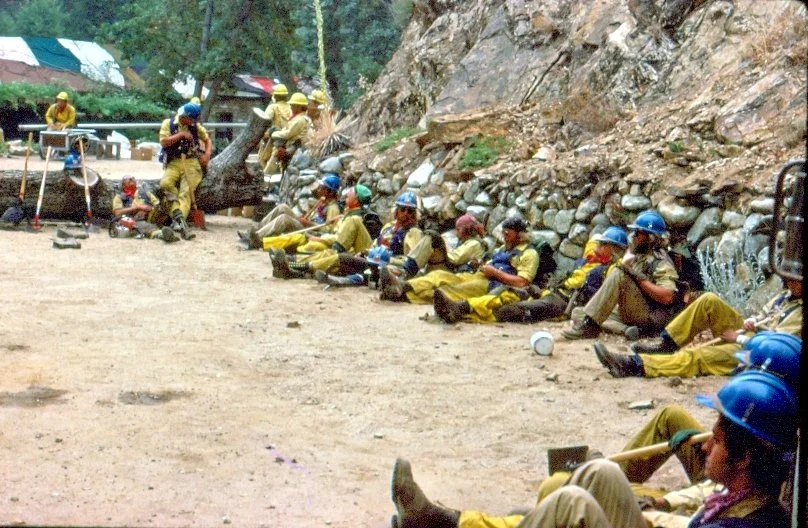
Marble Cone Fire Hotshot Crew in 1977.
When Sue entered the field, women in wildland fire were few and far between. Her own experience, she reflects, was largely positive, she found strong teams and supportive supervisors, and was accepted early on. But she’s clear that this wasn’t universal.
She witnessed firsthand the structural challenges many women faced and how slowly things changed.
Despite incremental increases in representation, Sue notes that women remain underrepresented, especially in leadership roles. In some ways, she sees even fewer women in upper management today than during parts of her career.
Her insight is simple but powerful: representation matters.
“Fire crews and the broader fire workforce are stronger when they reflect the diversity of the communities they serve.”
Having multiple women on crews reduces isolation, improves team dynamics, and shifts culture in meaningful ways.
The Impact of the Bernardi v. USFS Case
Sue’s career unfolded during a pivotal moment for gender equity in federal land management agencies. In the 1970s, she was part of the class affected by Bernardi v. USFS, a landmark lawsuit that challenged the U.S. Forest Service for systemic discrimination against women in hiring and advancement.
The case led to a consent decree requiring the agency to increase the hiring and promotion of women.
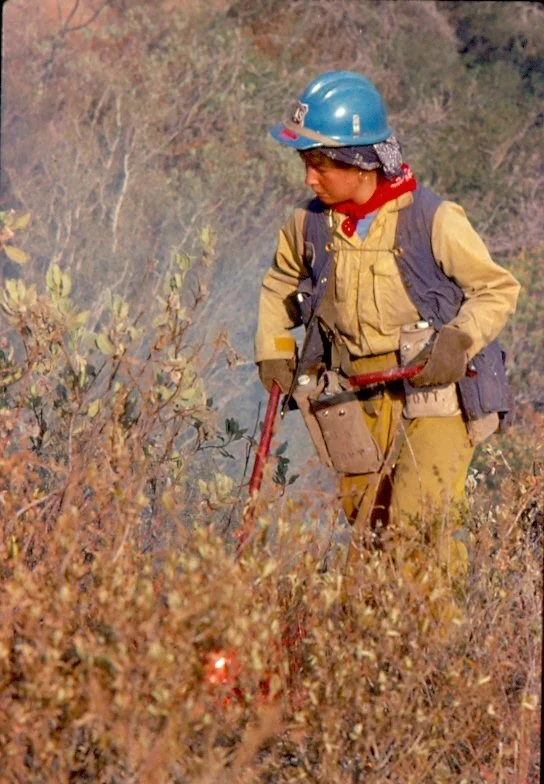
Sue Husari with a fusee.
But progress came with backlash.
Sue recalls that during this time, a harmful narrative took hold, that women hired into fire positions were selected because of their gender rather than their qualifications. That assumption followed many women across agencies and years, creating an additional burden: having to constantly prove their competence in environments already defined by high stakes and physical demands.
Despite this, Sue continued to rise through the ranks supported by mentors and colleagues who recognized her skill and leadership.
Her career stands as a testament not only to her own capability, but to the importance of structural change in opening doors that had long been closed.
Fire, Memory, and the Roots of FUSEE’s Wellness Retreats
Sue’s connection to FUSEE’s wellness retreats stretches back decades, long before the retreats themselves existed.
In 1977, she was part of a hotshot crew assigned to the Marble Cone Fire in Los Padres National Forest. During a grueling burnout operation along Tassajara Creek, Sue worked one of the longest shifts of her career. It was a formative moment, one that would come full circle years later.
Her crewmate, Caroline Caw, documented that time through a series of color slides. When Sue later learned about FUSEE’s first retreat at Tassajara, she shared those photos capturing the landscape from an earlier time.
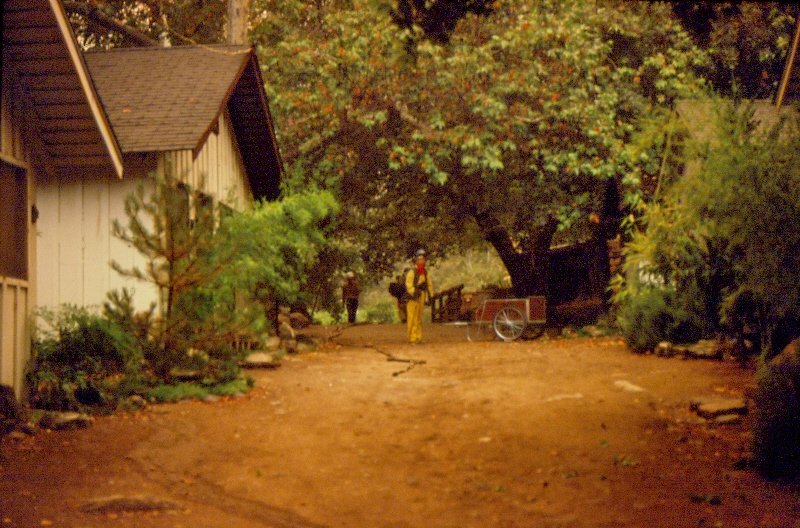
Color Slide from Tassajara during the Marble Cone Fire.
Since then, Sue has become a core part of the retreat community. She has attended multiple retreats, served as a peer leader, and now helps with logistics and work practice helping to ensure others can access the same experience.
She describes the retreats as a rare and vital space in wildland fire:
“A unique opportunity for wildland firefighters to experience fire and relationships in a new way and to really open up.”
While hosted at Tassajara, the retreats are intentionally non-denominational. Rooted in mindfulness rather than religion, they create space for firefighters of all backgrounds to reflect, connect, and build tools for resilience. Participants range from rookies to retirees, spanning agencies and generations.
Originally conceived as a “thank you” to the wildland fire community, the retreats have become something more: a cornerstone of cultural transformation within fire.
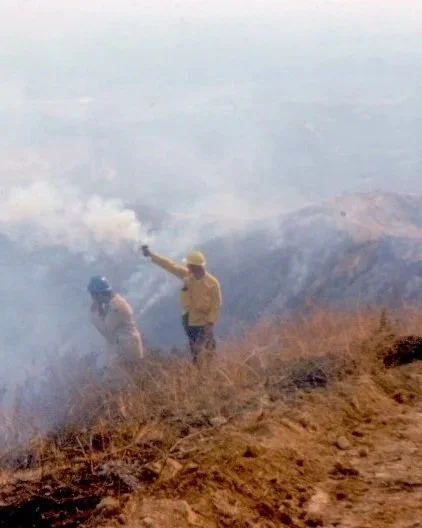
Wildland firefighters at the Marble Cone Burnout
Building a Sustainable Fire Future
Sue’s vision for the future of fire is grounded in both experience and urgency.
Over her career, she has witnessed a dramatic shift in fire behavior, one that she attributes directly to climate change.
“It’s unbelievable how quickly and dramatically fire behavior has changed… it’s only been 50 years, but the change is drastic.”
This transformation demands a shift in how we approach fire. Sue hopes to see a return to a fire culture rooted in conservation and ecological stewardship, one that prioritizes prescribed fire, natural fire management, and a deeper connection to land.
While she acknowledges current trends toward increased suppression, she remains hopeful that the pendulum will swing back toward more balanced, ecologically informed practices.
Advice for the Next Generation
For young women considering a career in wildland fire, Sue offers clear, practical advice:
Build technical skills through education and certifications (like EMT training)
Prepare physically for the demands of the job
Understand the realities of the current system and where it may be headed
But just as importantly, she emphasizes mental and emotional preparation.
Mindfulness, meditation, and practices like yoga aren’t extras; they’re essential tools for navigating the intensity of fire work. It’s one of the reasons she believes so deeply in the value of FUSEE’s retreats.
A Legacy of Leadership and Care
Throughout her career, Sue Husari has helped shape not only fire management, but fire culture.
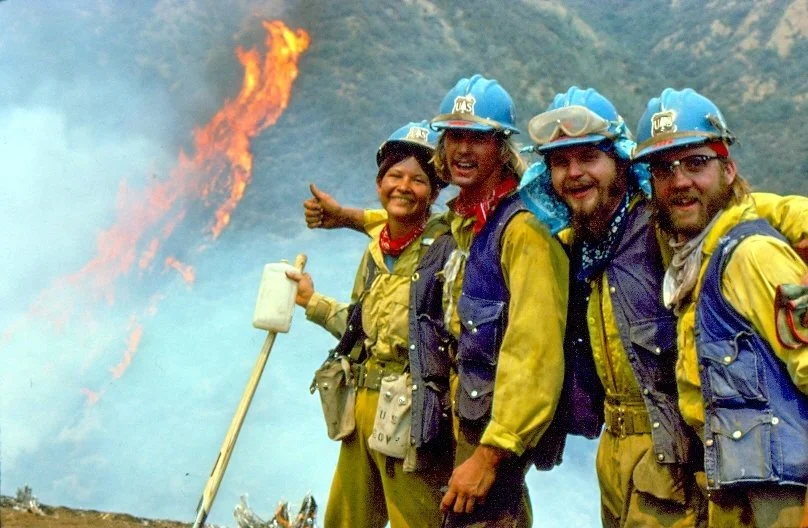
Sue and her crewmates. 1970s.
Her leadership spans suppression, policy, mentorship, and now, wellness and transformation. From the fireline to the retreat space, she has consistently worked to make wildland fire a more inclusive, reflective, and sustainable field.
As we celebrate Women’s History Month, Sue’s story is a reminder that progress in fire doesn’t just come from changing how we fight fire, it comes from changing how we show up for each other.
And thanks to leaders like Sue, that change is already underway.