Firefighter Safety is the #1 Priority: Safety Risks Include Physical and Mental Health Hazards
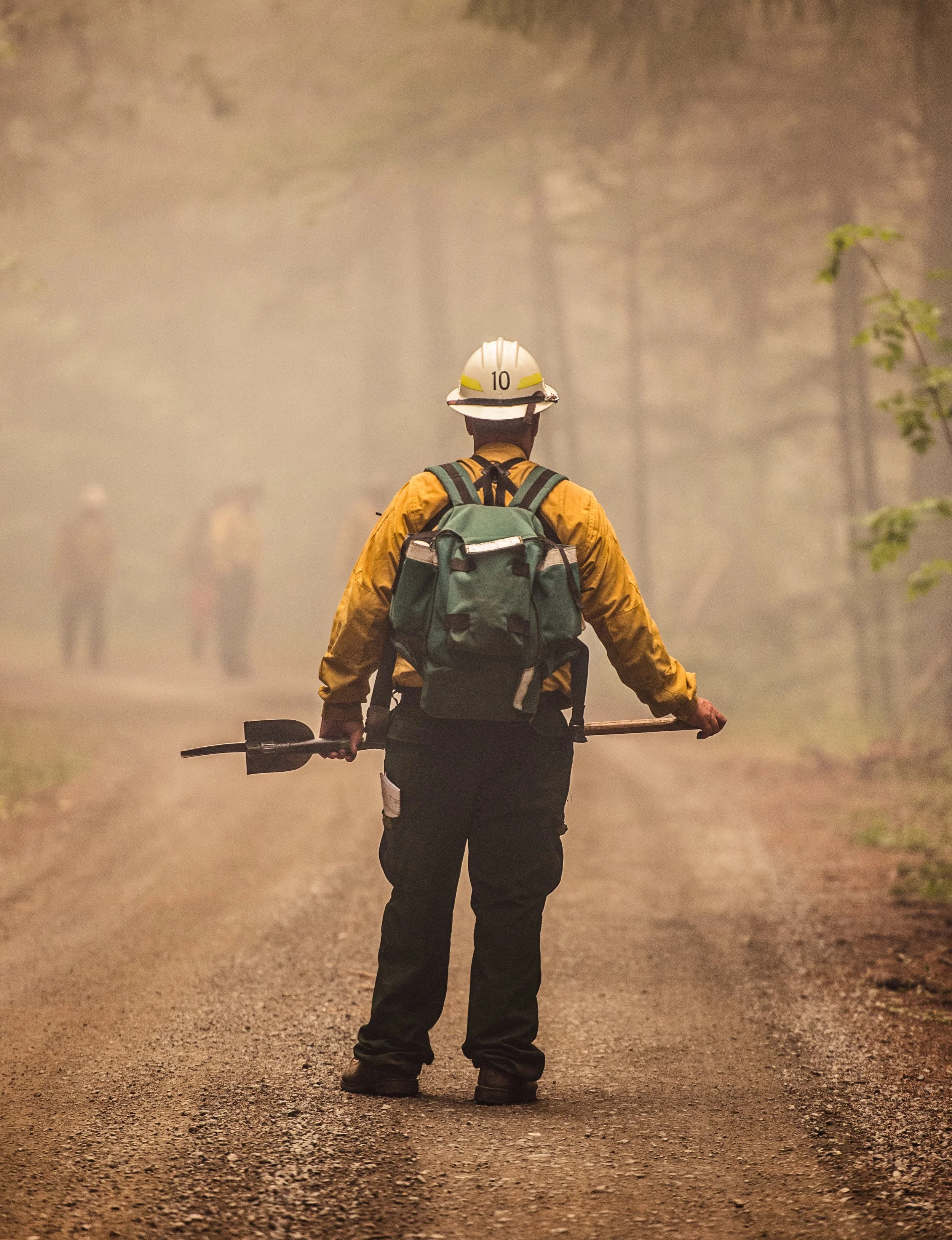
USFS
The majority of wildland firefighters are a super-exploited seasonal labor force with abysmal wages and horrible working conditions. The job has inherent dangers from numerous environmental and occupational safety risks and health hazards. Crews often suffer in silence from chronic social and environmental stresses that impact their mental health. Just a few examples: Working for low wages that are insufficient to pay essential bills. The lack of affordable housing and quality health care. The social disruption and isolation from working for extended periods in remote areas far away from friends and families. The horror of working in the incinerated ruins of homes and communities. The persistent underlying stress of risking one's life, punctuated by the occasional trauma of losing crewmembers. All of these and more can create severe mental health impacts on wildland firefighters. Not surprisingly, this occupation has one of the highest risks of depression and rates of suicide in the U.S.
“Invisible Risks; Hidden Hazards”
Adding to these mental health strains and stresses are recent revelations about some physical health hazards and risks of dreadful diseases that can afflict firefighters long after they have left the job and hung up their fire boots for good. In fact, researchers have identified 32 workplace and environmental hazards that can gravely impact the short- and long-term physical health of wildland firefighters. Most people are vaguely aware of the acute risks of getting burned by flames, or crashing in aircraft or vehicle accidents, or the health hazards of inhaling intense amounts of wood smoke. Their apparent willingness to risk life and limb and lungs to fight fires is a major reason why wildland firefighters are held in such high public esteem as "heroes."
But calling them heroes is one thing, expecting them to be victims is another thing. Beyond the known risks cited above, there are a number of additional material, chemical, and biological hazards affecting firefighters' physical and mental health that are largely hidden from most people and have so far escaped much scrutiny by federal fire agencies or policymakers. Wood smoke from forest fires has several known carcinogenic substances, but the toxic smoke from synthetic materials and petrochemicals burning in structure and urban fires is especially hazardous. In fact, most incinerated homes and neighborhoods are treated as hazmat sites, but wildland firefighters labor in these environments without sufficient personal protective equipment. The fact is, today's climate-driven megafires are increasingly pulling wildland firefighters into structure protection and urban fire situations. The combination of forest and urban smoke make wildland firefighters now face up to a 43% higher risk of developing lung cancer, a 30% increased risk of contracting cardiovascular disease, and growing rates of rare cancers affecting several organs.
Other health stresses and hazards come from the soaring summer temperatures of heat waves and heat domes that put wildland firefighters at grave risk of heat exhaustion or heat stroke. Whole crews are getting pulled off the firelines and individual crewmembers are having emergency medical evacuations due to life-threatening heat-related health breakdowns. Far from the dangers of getting burned by flames, crews are getting baked from arduous labor in excessive heat.
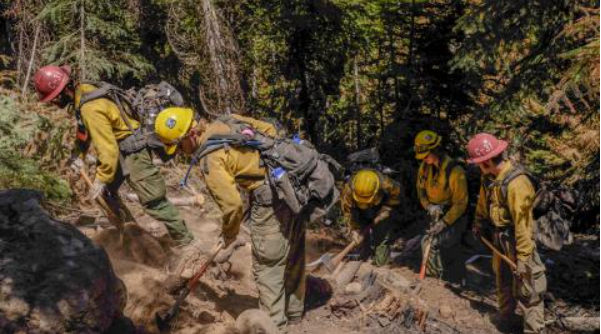
Wildland firefighter crew at work. USFS
Besides these environmental health hazards that can also afflict large sectors of the public in active wildfire areas, wildland firefighters also face some unique occupational health hazards. Researchers have discovered a host of toxins contained in firefighter uniforms, gear, and equipment. The trademark green and yellow Nomex firefighter uniform contains high levels of PFAS that are known to cause several diseases including rare cancers afflicting multiple organs. These toxins that are soaked into uniforms and gear can readily penetrate hot, sweaty skin.
Firefighters also inhale toxic fumes from idling engines and machine exhaust, the ignition devices they use, and mist from retardant chemicals that contain heavy metals. Crews are also ingesting toxins from "mystery meat" and moldy, rotten food rations, and from drinking water out of hot plastic containers exposed to sunlight. There are also toxins in substandard employee housing that is infested with rodents, insects, dust and mold. Again, far from the tangible dangers of getting overrun by flames or smoke, firefighters face a number of environmental and occupational health hazards and their associated diseases. These hidden hazards add extra risk and burdens to firefighters' physical and mental health and wellbeing.
Wildland Firefighters Deserve Better
Because of their critical role in emergencies, wildland firefighters are considered essential workers, but government agencies treat them like expendable soldiers. There are many ways to avoid or mitigate some of their exposure to toxins in their working environment, uniforms and equipment, food and water and housing. Crews should be paid a living wage with access to adequate health care and long-term health monitoring. But the growing physical-mental health crisis afflicting the wildfire workforce has been largely ignored by government agencies and policymakers. They are satisfied with continuing the status quo of super-exploiting the labor and lives of wildland firefighters.
This is a social and environmental injustice that bears repeating: wildland firefighters are essential not expendable workers.
According to the Federal Wildland Fire Policy, firefighter safety is the number one priority on every wildfire incident. FUSEE is expanding our work doing public education and policy advocacy for firefighter safety to broaden the definition of safety to include physical and mental health risks and hazards. We intend to partner with allied groups and organizations to wage a campaign to address known occupational health hazards that imperil firefighter health/safety.
A first goal is demanding that the toxins in firefighters' uniforms and food be removed immediately. All Nomex uniforms contaminated by PFAS should be removed from fire caches and replaced with non-toxic alternative fabrics. All Meals-Ready-to-Eat (MREs) contaminated by heavy metals and other toxins should be destroyed and replaced with alternative rations that have more nutritional value. These are demands well within the control of agency decisionmakers, and should be implemented immediately.
Stay connected with FUSEE's social media, newsletters, and website to learn more about ways to promote firefighter health and wellness.
Learn about Firefighter Health and Wellness Resources.