Hold the Line: Healing Through Connection at FUSEE’s Wildland Firefighter Retreats
by E. Benington
Once again, I had the opportunity to go to the annual wildland firefighter retreat this year at Great Vow Zen Monastery in Oregon.
Once again, my heart was broken over and over again to hear the stories of immense pain from fellow wildland firefighters.
Once again, my heart is breaking at the atrocities being committed to our environment and the genocides being committed across the world.
For the past two years, FUSEE has been involved in facilitating mindfulness retreats specifically for wildland firefighters. These are multi-day retreats offered on a sliding scale, currently being held in Washington, Oregon and California.
There is no requirement to have experienced capital 'T' trauma at work to attend one of these retreats (though many folks have); but the more you listen, the more you find this job impacts our lives in the most insidious ways - relationships, health, adrenaline fatigue, scheduling time with loved ones and time for oneself.
The impacts of this job on our physical and mental health, it turns out, are huge.
I have met wildland firefighters in the US who were tasked with scouring the charred remains of homes for human teeth and bones.
A friend of mine lost most of his belongings, including decades of poetry and manuscripts he had written, when a wildfire consumed his fire station where his personal truck was parked. He was fighting a fire in another part of the country at the time. He told me he hasn’t written since.
PTSD rates in wildland firefighters are estimated to be around four times that of the general public; and suicide rates double that of the general public. The impacts on our physical health have historically been largely unknown, but more data is revealed every year. The International Agency for Research on Cancer listed firefighting (both structural and wildland) as a Group 1 carcinogen (the highest level). Wildland firefighters have an increased risk of lung cancer mortality (8% to 43% higher than the general public) (Navarro, 2020), and cardiovascular disease mortality (16% to 30%).
I have a friend who was working in Jasper, AB while it burnt to the ground. We do not use respiratory PPE as wildland firefighters, so as her and her crew worked alongside structural firefighters equipped with SCBAs (Self Contained Breathing Apparatus - essentially oxygen tanks) her crew breathed in lungfuls of extremely toxic, non-vegatative smoke for days with no protection as buildings and gas stations burned. After quickly noticing the impact this had on her health, she had to fight against her employer for testing.
For many of us, our job description still lists us not as first responders or even firefighters but as 'forest technicians’, exempting us from certain benefits and hazard pay. The words of one retreat participant rang in my head for many days afterwards:
“I have worked with many people in this job who should be retired right now. But they're not, because they're dead.”
Firefighter health is just one of the topics grappled with at the retreat. Something the facilitators do so well is to create an environment wherein folks feel safe to speak about everything from their deepest trauma (which does not have to be directly related to the job) to the small annoyances and the great joys that this line of work provides. And it happens almost immediately. From the first ‘circle’, participants are invited to introduce themselves and place a meaningful item on an altar that is kept and honored throughout the retreat. Standing up and speaking in front of the group, people shed tears and shared things they never expected to share with close to 30 complete strangers.
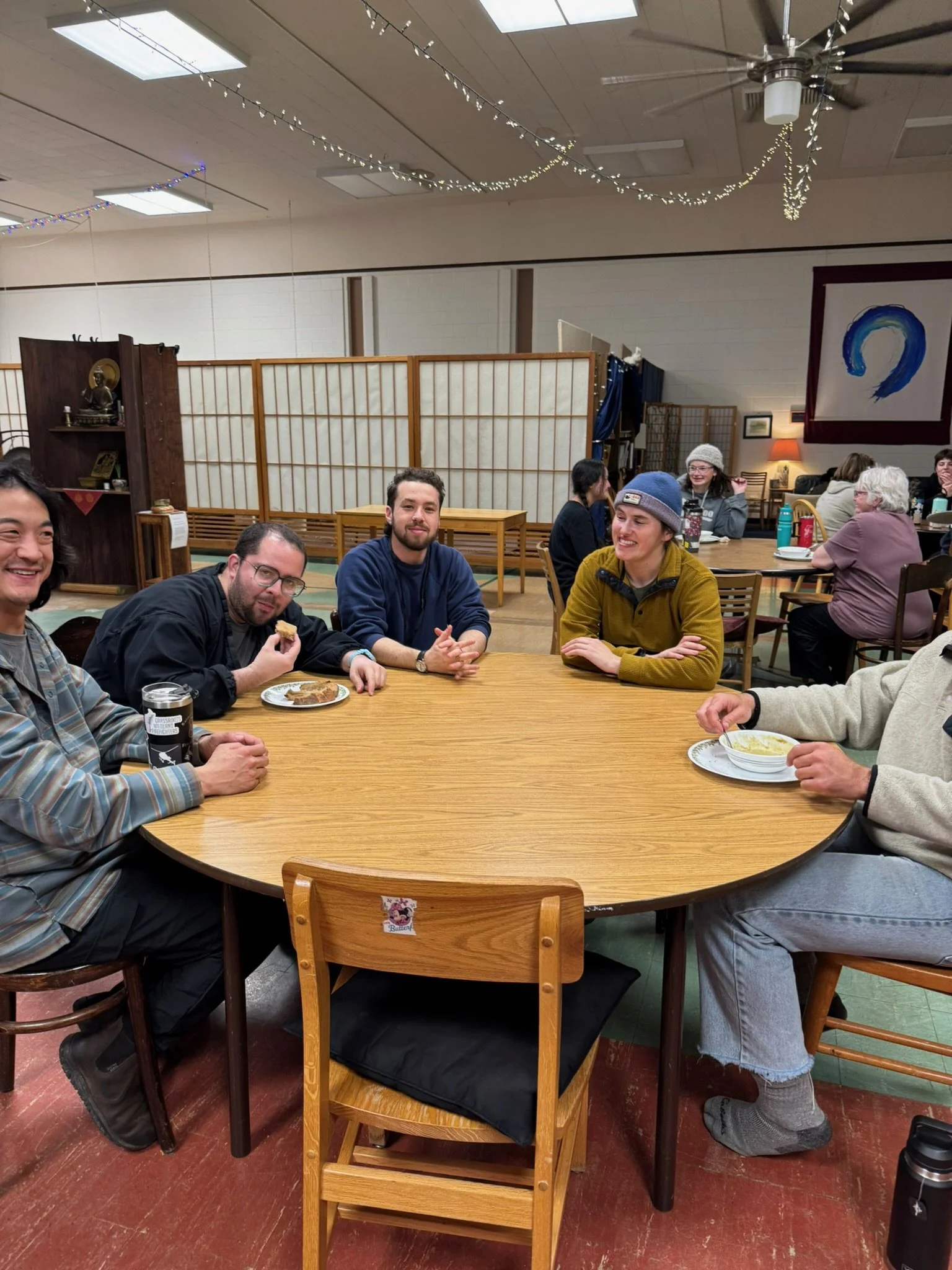
Retreat participants and monastery residents socialize during mealtime.
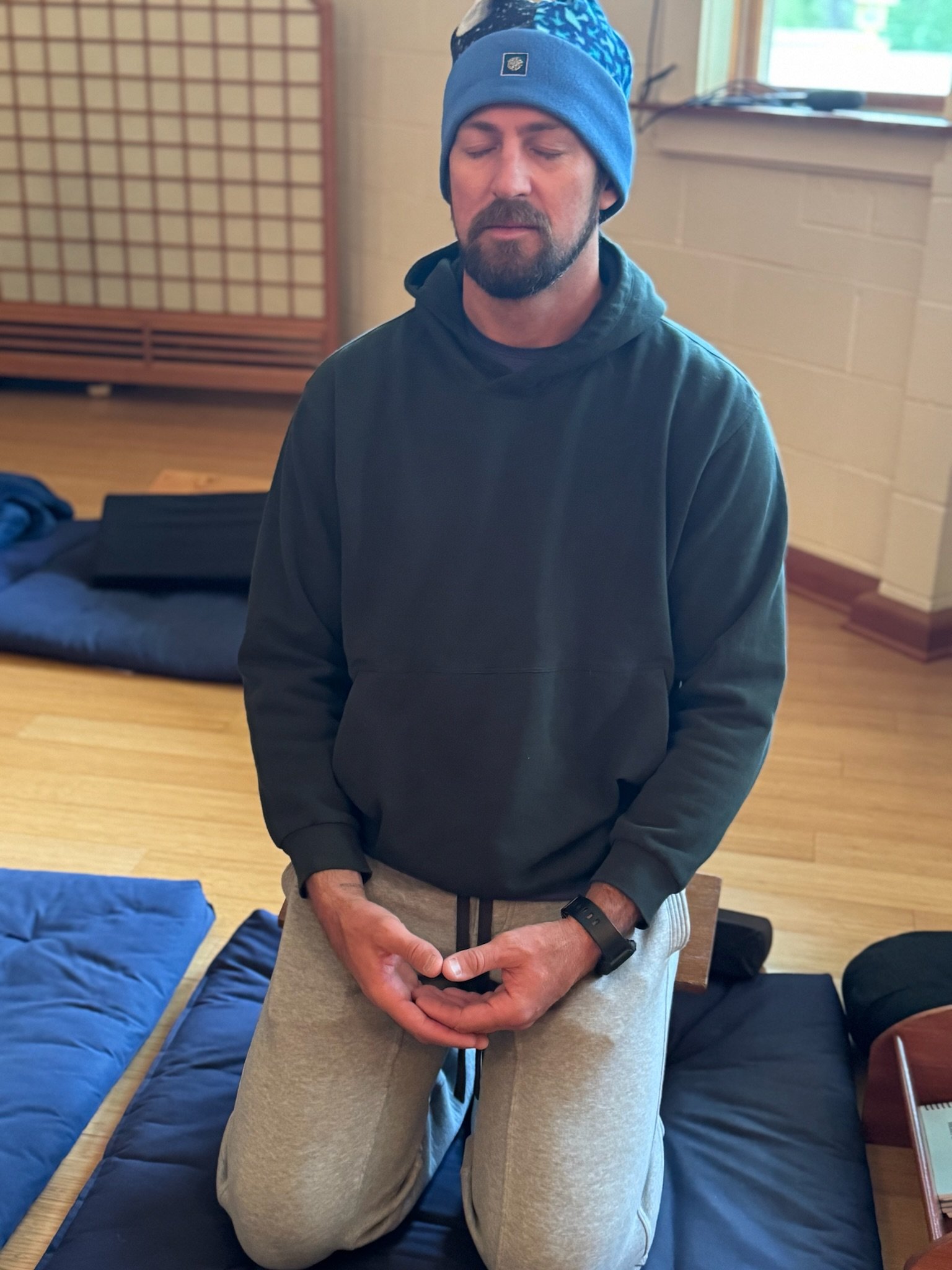
Wildland firefighter meditating in the Zendo.
From here, the connection and healing only gets deeper. The retreat consists of time with the whole cohort - usually 25 participants and 3 facilitators - engaged in meditation, activities and discussion, and time in intimate ‘core’ groups of 8 to 10 participants and one facilitator. There is also the option to take part in the daily practices of the monastery - morning Zendo meditation, chanting and more. A beautiful coincidence is that Jizo - the Bodhisattva¹ that this particular monastery is dedicated to - is the protector of children, travelers and notably, firefighters.
I have worked with many firefighters who take wonderful care of their crewmates and have fought for better support and resources for mental health for all of us. But the truth is, many of us don’t know where to start in creating authentic, vulnerable connections with our peers. And even if we do, we may face barriers in the shape of peer pressure, stigma around talking about feelings, macho culture, and an unwillingness from our employers to allocate time or resources to mental health. We are a workforce who is often resistant to change, and especially resistant to anything that could be perceived as vulnerability or weakness.
The retreat creates a model of what a fire community could look like and feel like. One firefighter said after the retreat:
“We very quickly, in a very short amount of time, became deeply meaningful to each other because of the ways in which we showed up for each other. The world will be very quick to tell you that that kind of connection isn’t possible, but they were not there, they did not experience it.”
After spending a week listening to so many stories of abject pain and grief from firefighters, it can leave one feeling like a pallbearer for the grief of the community. But there is so much hope, resiliency and community built into these retreats that I feel more hope for our stubborn, dogged community than anything else. We don’t have to carry it alone.
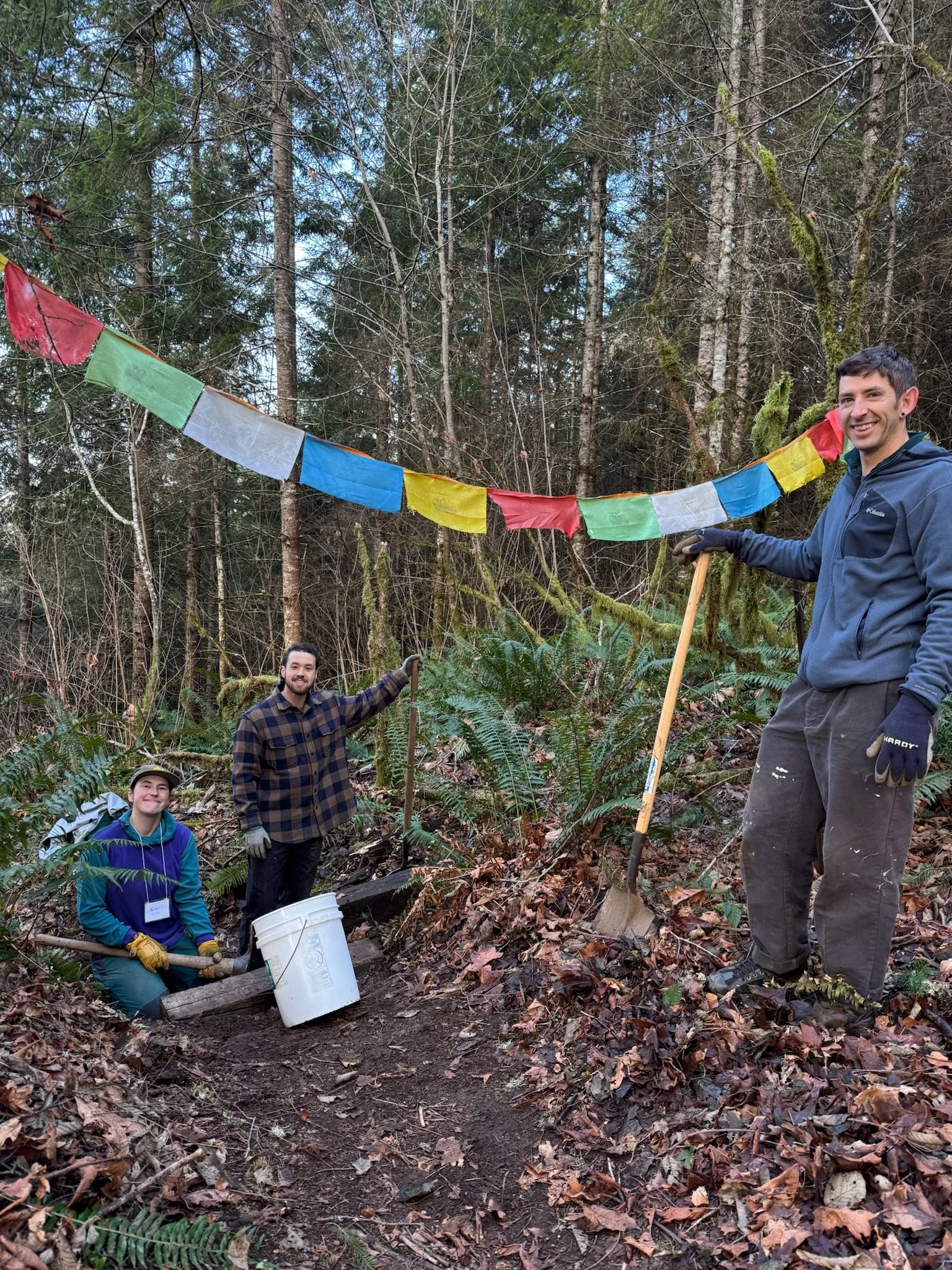
Wildland firefighter participants spent an afternoon working on monastery grounds maintenance as a way to give back to the community and land as hosts of the retreat.
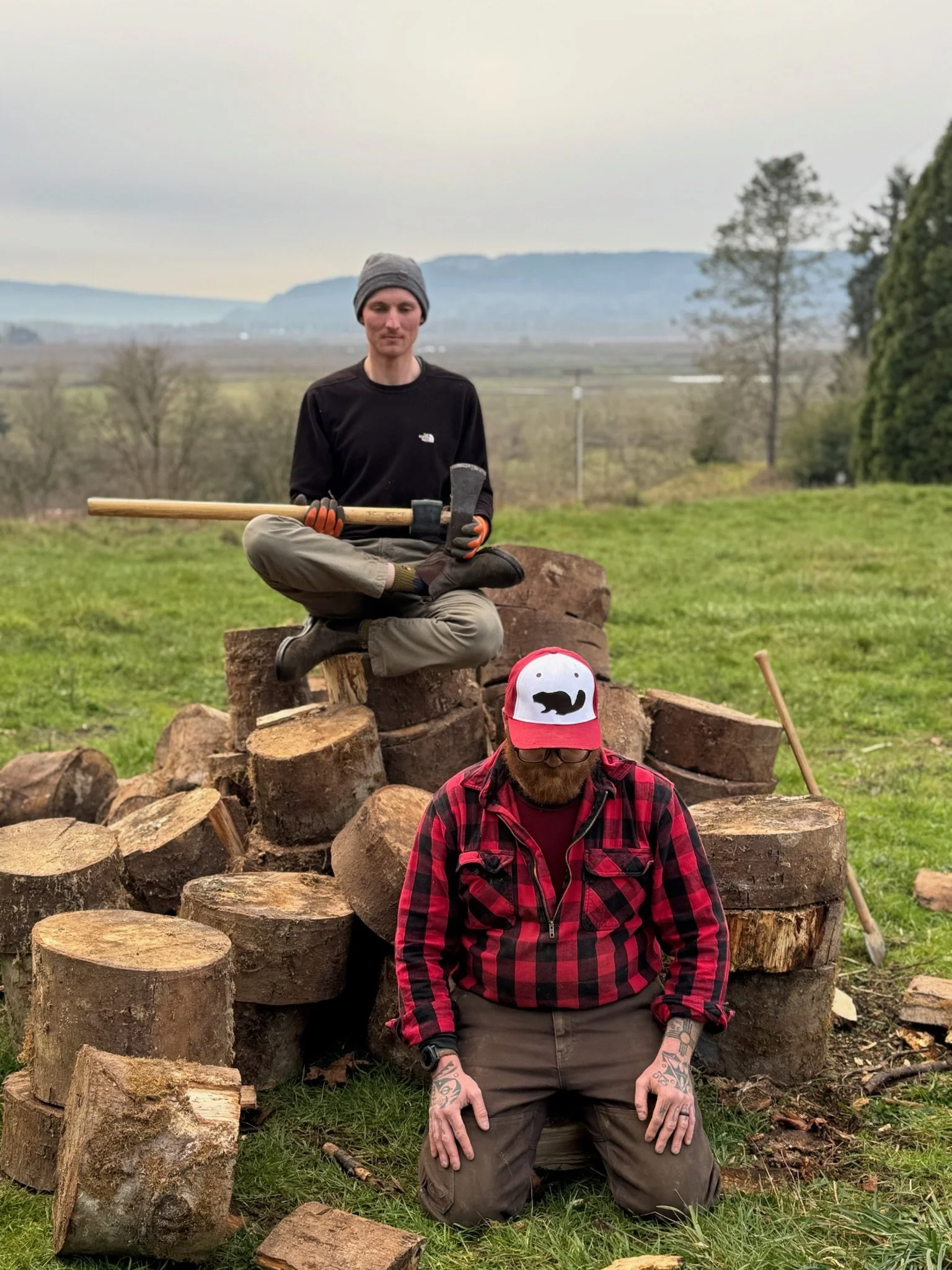
A monastery resident and wildland firefighter take a mindful moment while chopping wood.
¹“A bodhisattva is a Buddhist deity who has attained the highest level of enlightenment, but who delays their entry into Paradise in order to help the earthbound.” https://www.historytoday.com/archive/foundations/what-bodhisattva
Sources:
PTSD amongst Wildland Firefighters: https://psychiatryonline.org/doi/full/10.1176/appi.pn.2023.05.5.38
Suicide rates amongst Wildland Firefighters:; https://www.nwfirescience.org/sites/default/files/publications/WF24159.pdf
Carcinogen classification:
https://www.occupationalcancer.ca/resources/flames-and-risks-firefighting-causes-cancer/
Risk rates of cancer in Wildland Firefighters:
https://research.fs.usda.gov/treesearch/61522