
This past August was the 30th anniversary of the epic conservationist victory that stopped the Warner Creek Fire salvage timber sale. This was a five-year battle by people across the country to save the arson-burned forest from salvage logging in the Cornpatch Roadless Area on the Willamette National Forest in Oregon. This roadless area was part of a habitat conservation area set aside for the endangered northern spotted owl. Even though all commercial and salvage logging was prohibited in the roadless area/habitat conservation area, simply because the forest burned the U.S. Forest Service proposed salvage logging clearcuts across 1,200 acres of that remote and rugged landscape. The wildfire and the agency's timber sale proposal sparked a firestorm of controversy. Conservationists rightly feared that all other owl habitat conservation areas could be logged if attacked by arsonists and vowed to stop the timber sale.
So many different actions took place over five years of struggle that it could fill a book (and someday that might happen!), but the action that caught the attention of the whole nation was the year-long blockade of the logging road that led to proposed clearcut units. The old logging road, FS Road 2408, formed one of the boundaries of the roadless area. People using nonviolent direct action continuously occupied the blockade through the howling winter storms and deep snows of the western Cascades for a year before President Bill Clinton ordered the Forest Service to withdraw the timber sale.
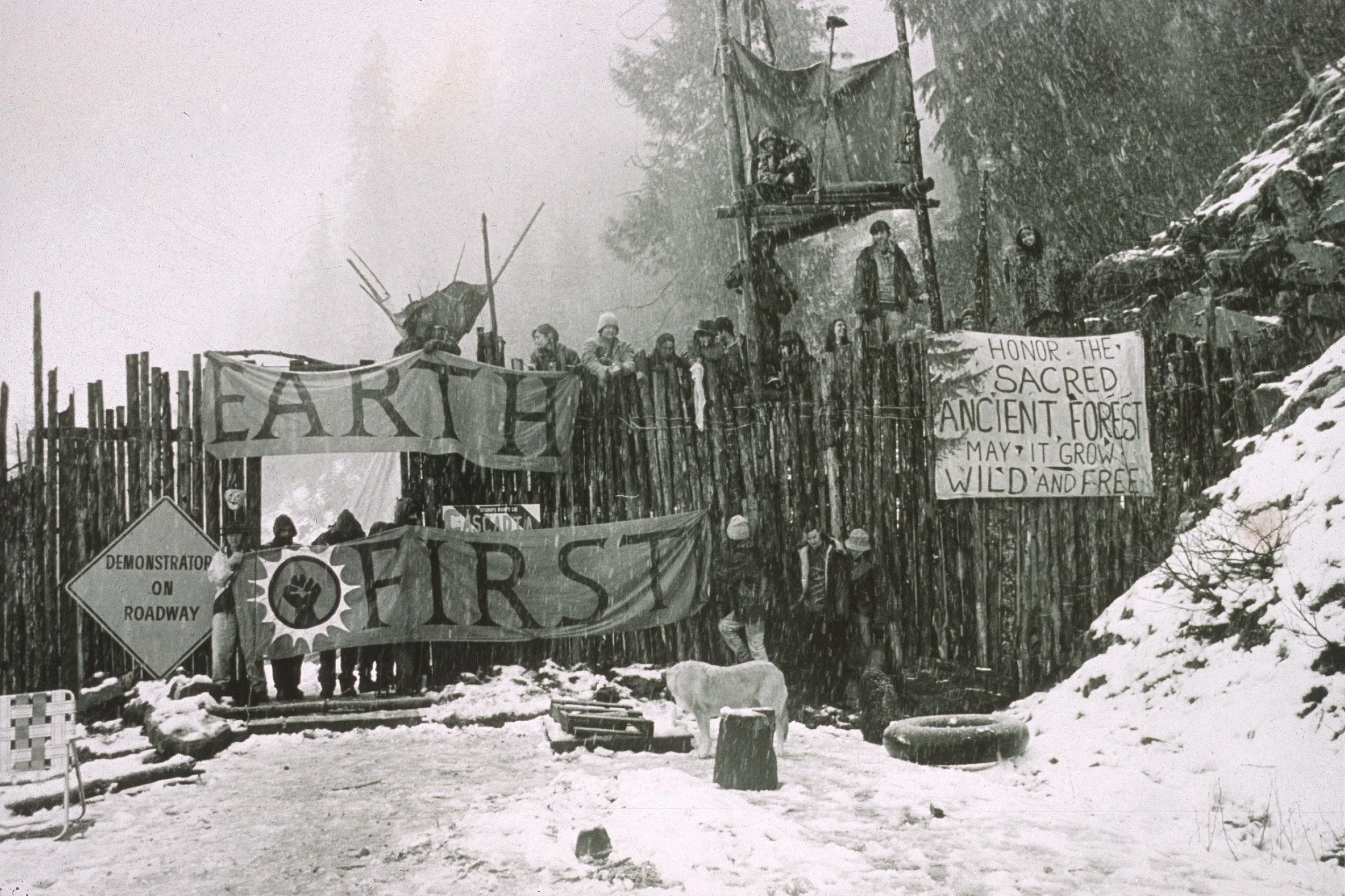
In 1996 forest activists stopped the Warner Creek arson-salvage timber sale with a year-long road blockade.
Stopping the timber sale meant opposing the state's number one industry at that time (the timber industry), the nation's number one national forest (the Willamette), and a bipartisan consensus in support of old-growth clearcutting by every legislative office holder from the President down to local mayor. The conservationist victory at Warner Creek was the most successful forest defense campaign of the 1990s and has been dubbed by scholars to be a "transformational event" that effectively ended the Timber Wars of that time.
The 30th commemorative celebration drew hundreds of people (below) to the old Woodworkers of the World Hall in Eugene where the party was held. This was a multigenerational event, with some aging forest activists who were part of the campaign 30 years ago, and a whole lot of younger forest activists eager to hear stories from their elders and bask in the glow of victory. The victory in Warner Creek was so overwhelming that for the last three decades the Willamette National Forest has been disinclined to propose any new timber sales anywhere near the burn. In fact, the area was thriving from the agency's benign neglect, and the jungle of natural regeneration growing in the Warner Creek burn was one of the agency's closest guarded secrets--it challenged its ideology that wildfires "destroyed" forests and that salvage logging and tree planting were required after fires.
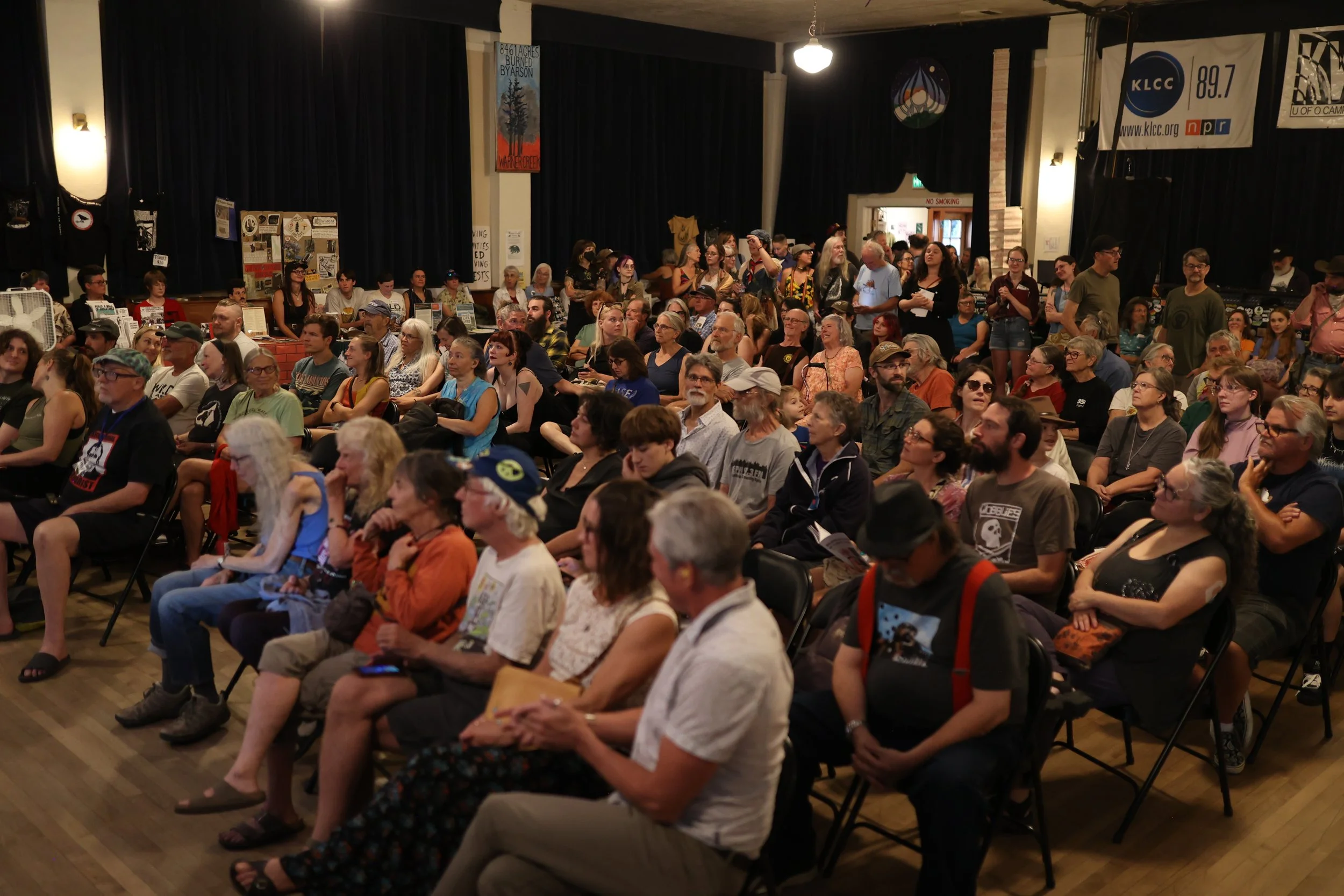
Panels of speakers at the event reveled in storytelling about how their bold actions back then protected the forest up to this day. But the confetti from the party had hardly been swept up when a shocking discovery was made: logging was in fact happening inside the "protected" Warner Creek burn! In 2022 the Cedar Creek Fire had burned over and all around the Warner Creek burn, and the Willamette National Forest was doing roadside clearcutting in the Cedar Creek Fire area. Across thousands of acres of public wildlands, including inside the Warner Creek burn and the Cornpatch Roadless Area, snags were being clearcut along all old logging roads in the area.
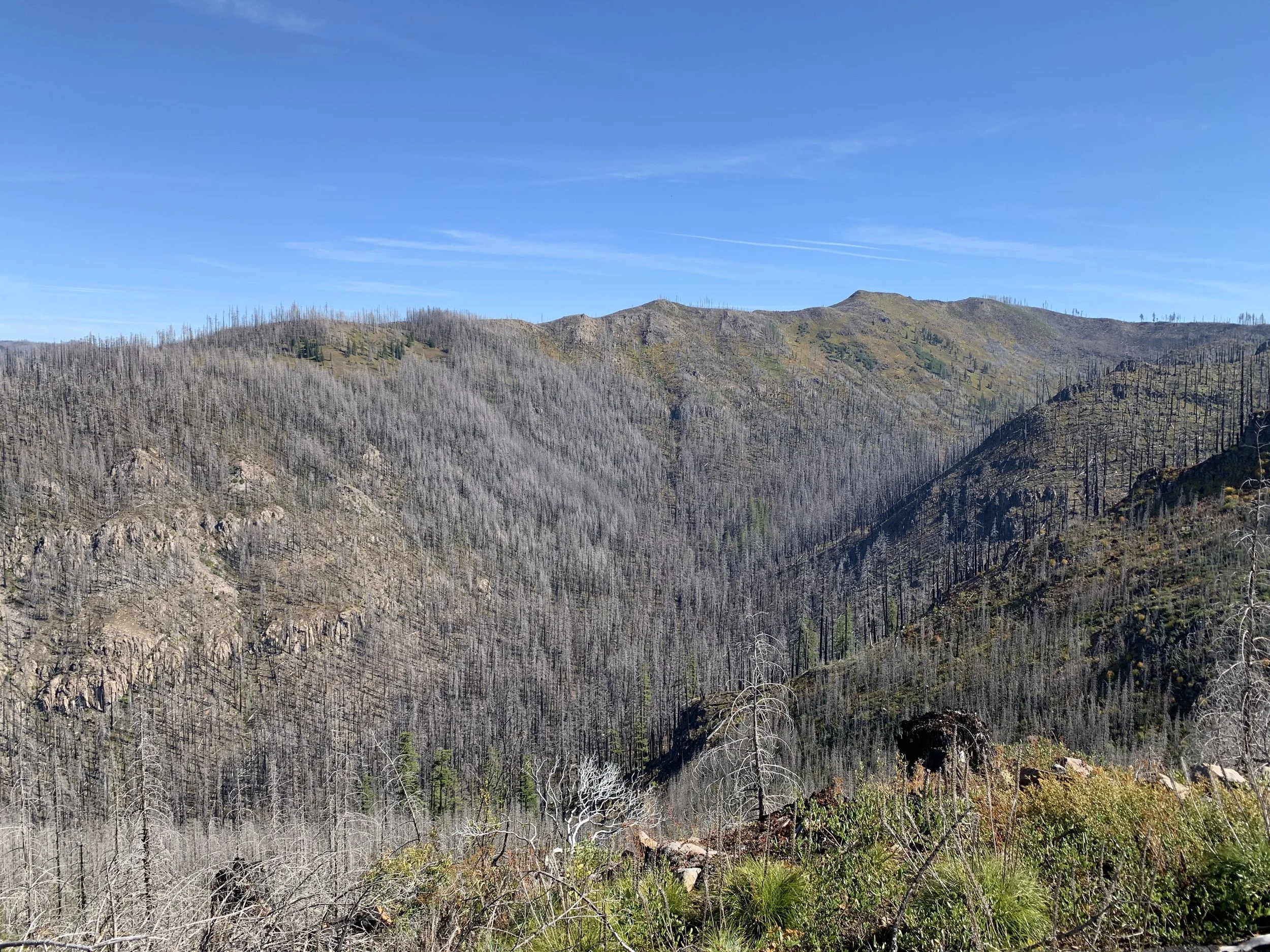
The remote Cornpatch Inventoried Roadless Area was burned by the 1991 Warner Creek and 2022 Cedar Creek Fires
The innocuously named "Middle Fork Fire Affected Roads Project" had slipped by most of the public's notice. Only two local forest watchdog groups (Cascadia Wildlands and Oregon Wild) submitted comment letters on the agency's Environmental Assessment about the massive logging project. The plan proposed removal of all so-called "danger trees" (fire-killed snags) up to 100 feet on both sides of every logging road with the proviso that this removal area be measured by the height-and-a-half of a site-specific tree. Although the whole landscape had been hammered by past clearcutting, there were some stretches of roads where trees were well over 100 feet tall. And tree removal on both sides of every road included logging giant snags downslope that were leaning away from the road--as if they could defy the law of gravity to fall upward to pose a "danger" to the road. Standing atop Bunchgrass Ridge looking over the expansive Cedar Creek fire area that covered the wide glacially sculpted valley below, the vast road network that had been carved into the landscape decades ago during the heyday of industrial logging was fully revealed as a network of fresh 200 foot wide clearcuts snaking through the snag forest.
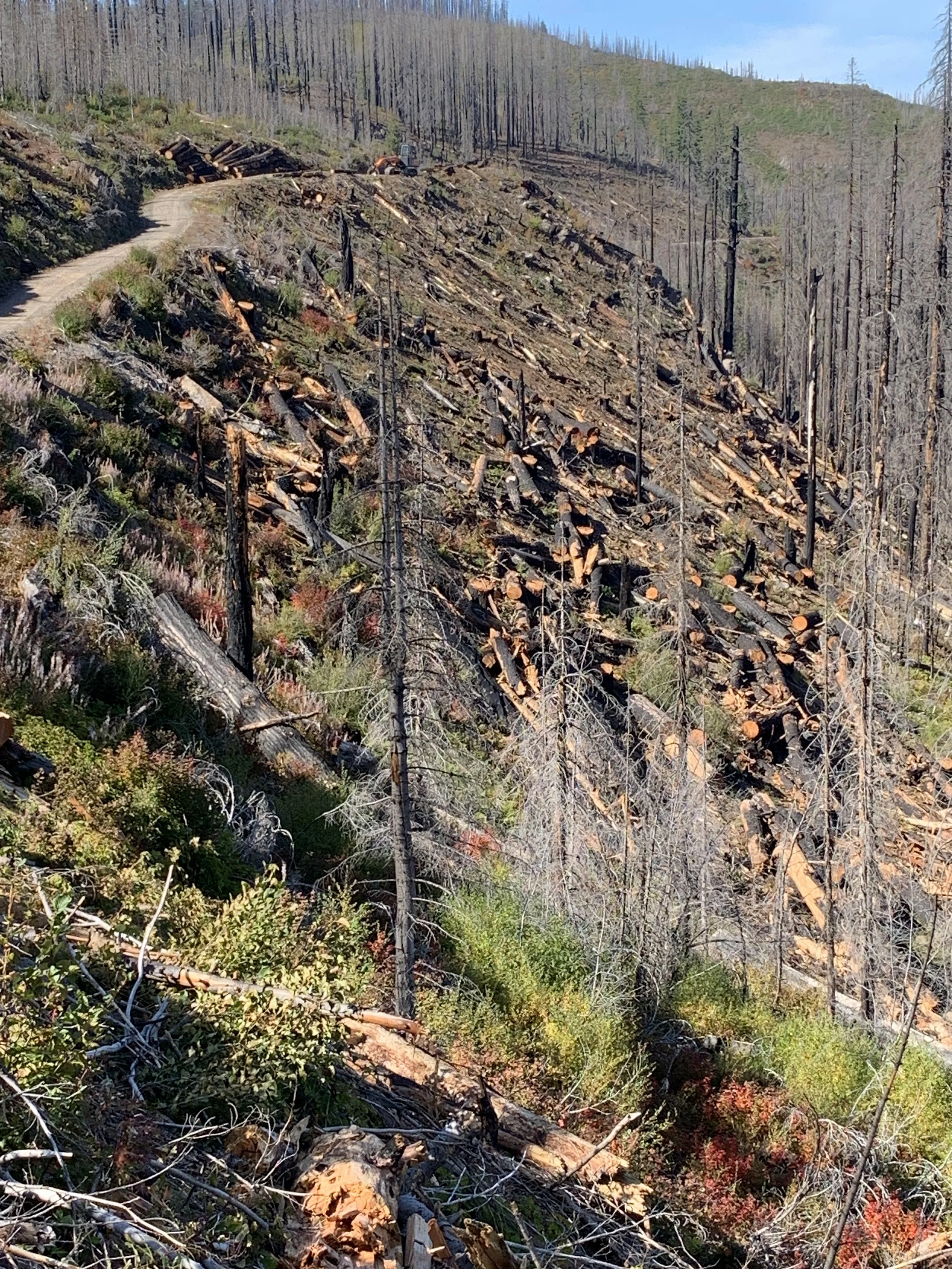
Like zombies rising from the dead, old logging roads appear out of new clearcuts
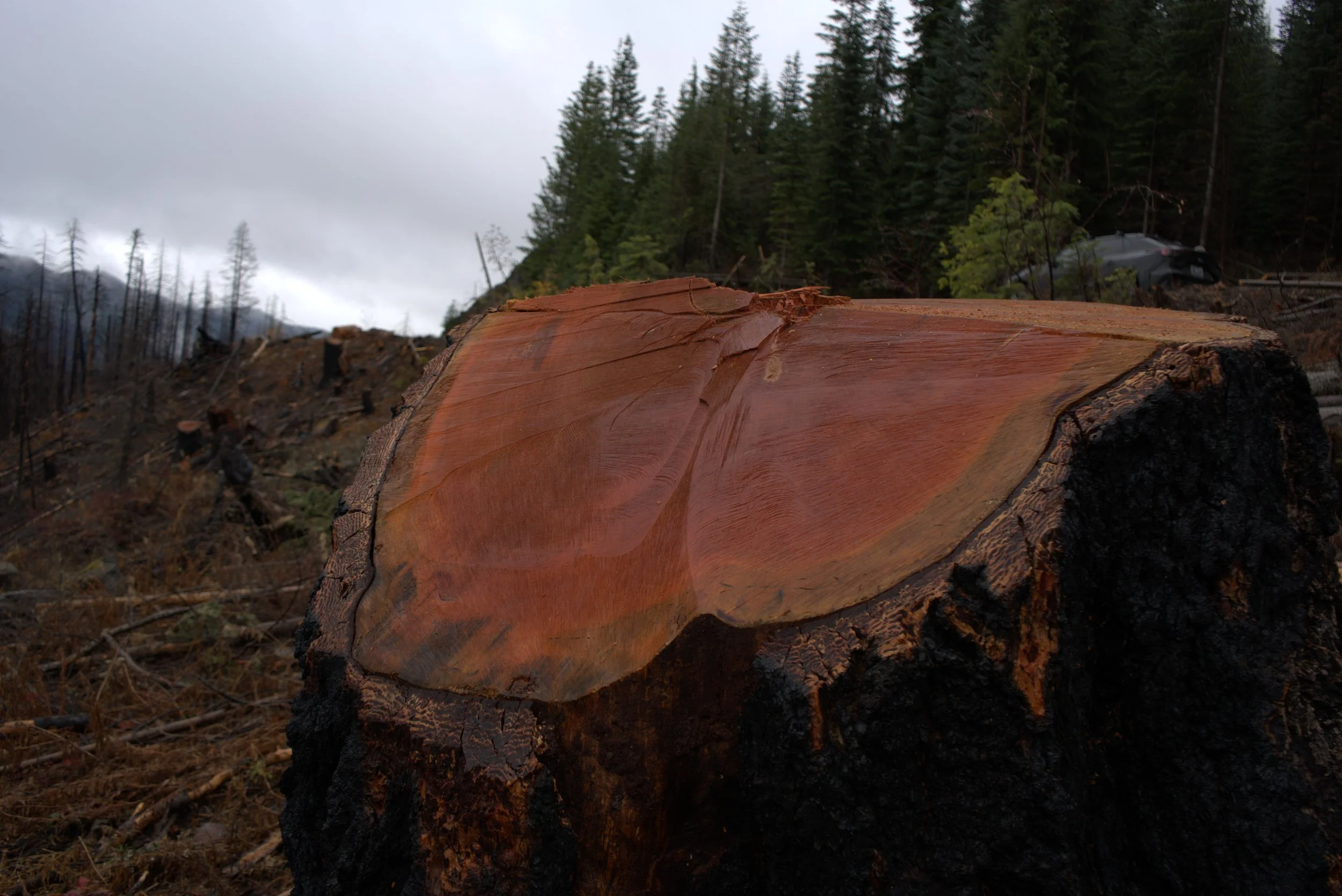
This giant stump is all that is left from a recently-burned tree that was located downslope and leaning downhill from the road above.
One of these old logging roads constitutes the boundary of the Cornpatch Roadless Area. Giant snags that had stood for decades, surviving both the 1991 Warner Creek Fire and the 2022 Cedar Creek Fire, were now giant logs decked on the side of the road. The giant machines that were doing the logging were parked next to the log decks. The clearcut scene simultaneously shattered two deeply-held myths: 1) the community has successfully saved Warner Creek for the last 30 years from any and all logging; 2) the Roadless Area Conservation Rule has successfully prevented new logging from happening inside roadless areas. Both myths were false!
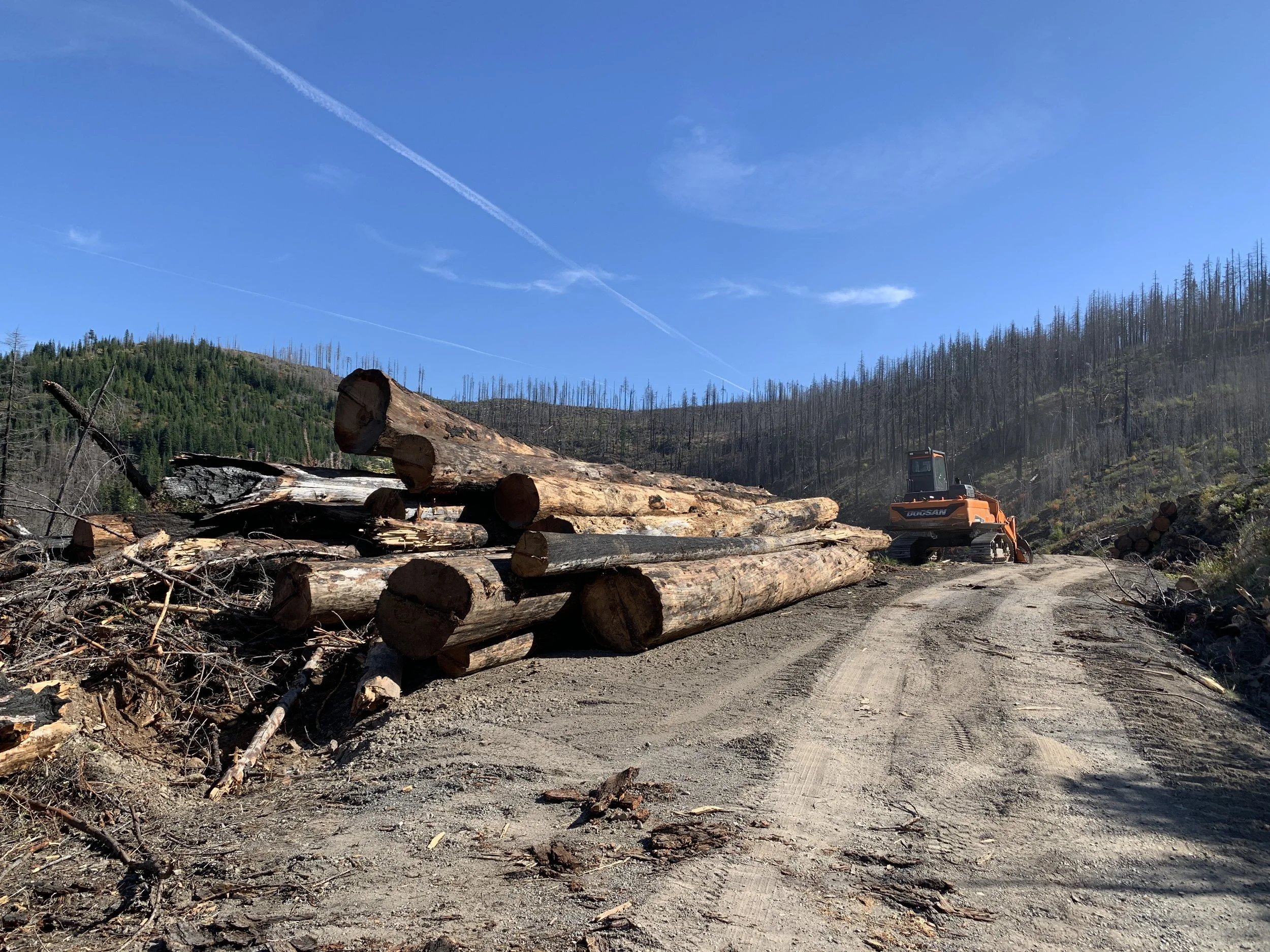
This old road forms the boundary of the Cornpatch Roadless Area that has now been erncroached by new logging.
The log decks were an imposing, depressing scene as very large logs up to five feet in diameter were stacked 20 feet high. We have just not witnessed this kind and amount of large-tree logging on the Willamette National Forest for a long, long time. It's not certain what will become the eventual use of those logs since a fair amount of decay exists around the outer rings of each log. The contractor doing the logging claims the logs are destined for "fish habitat restoration" projects. If that's true, it's equally shocking that the agency is committed to doing lots of restoration projects. It makes it perplexing for conservationists: they should be rightly outraged at the clearcut logging, but if the logs are destined for habitat restoration rather than commodity lumber products, does that make it ecologically acceptable?
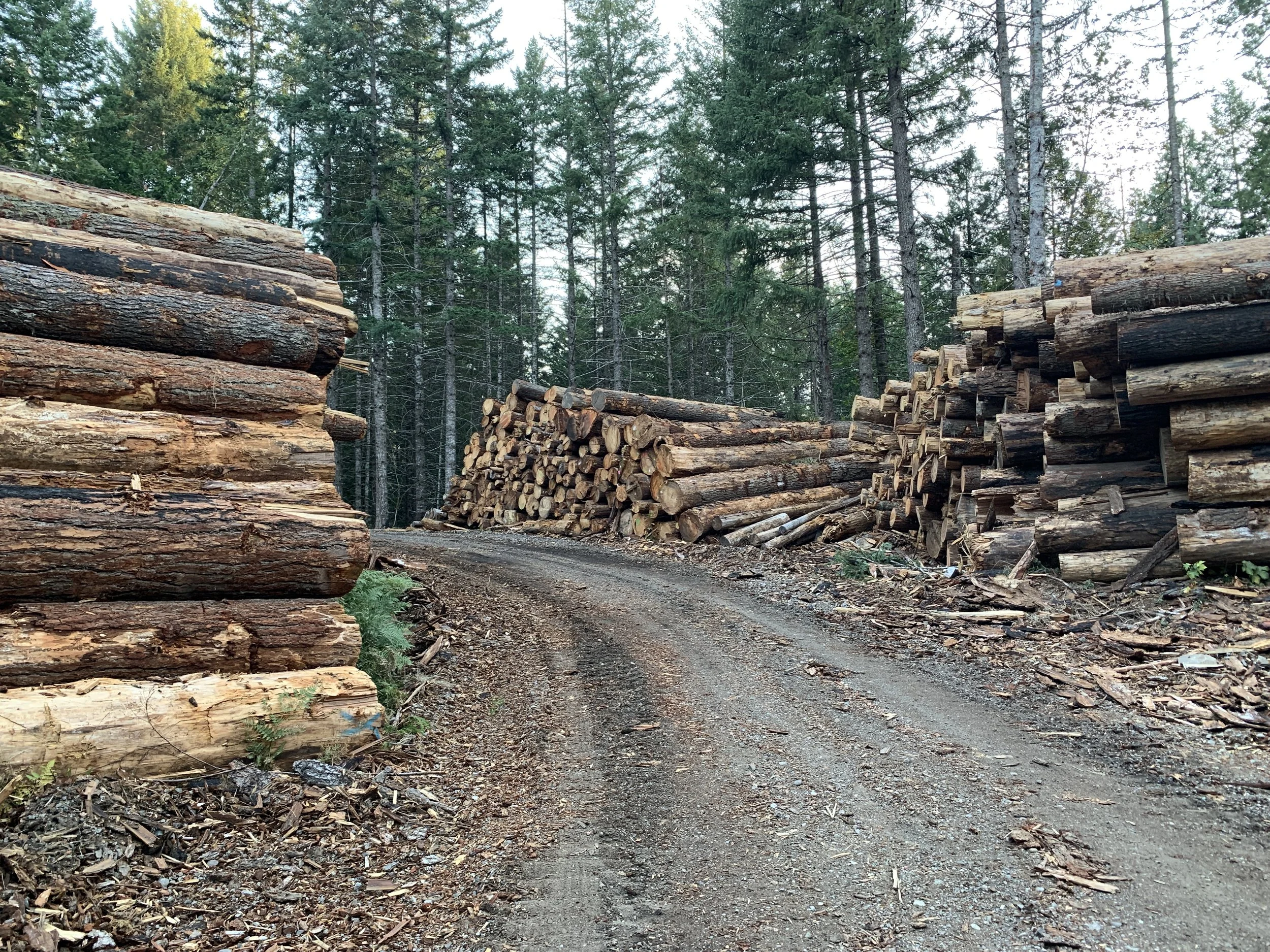
A canyon of carcasses from giant snags felled as "danger trees."
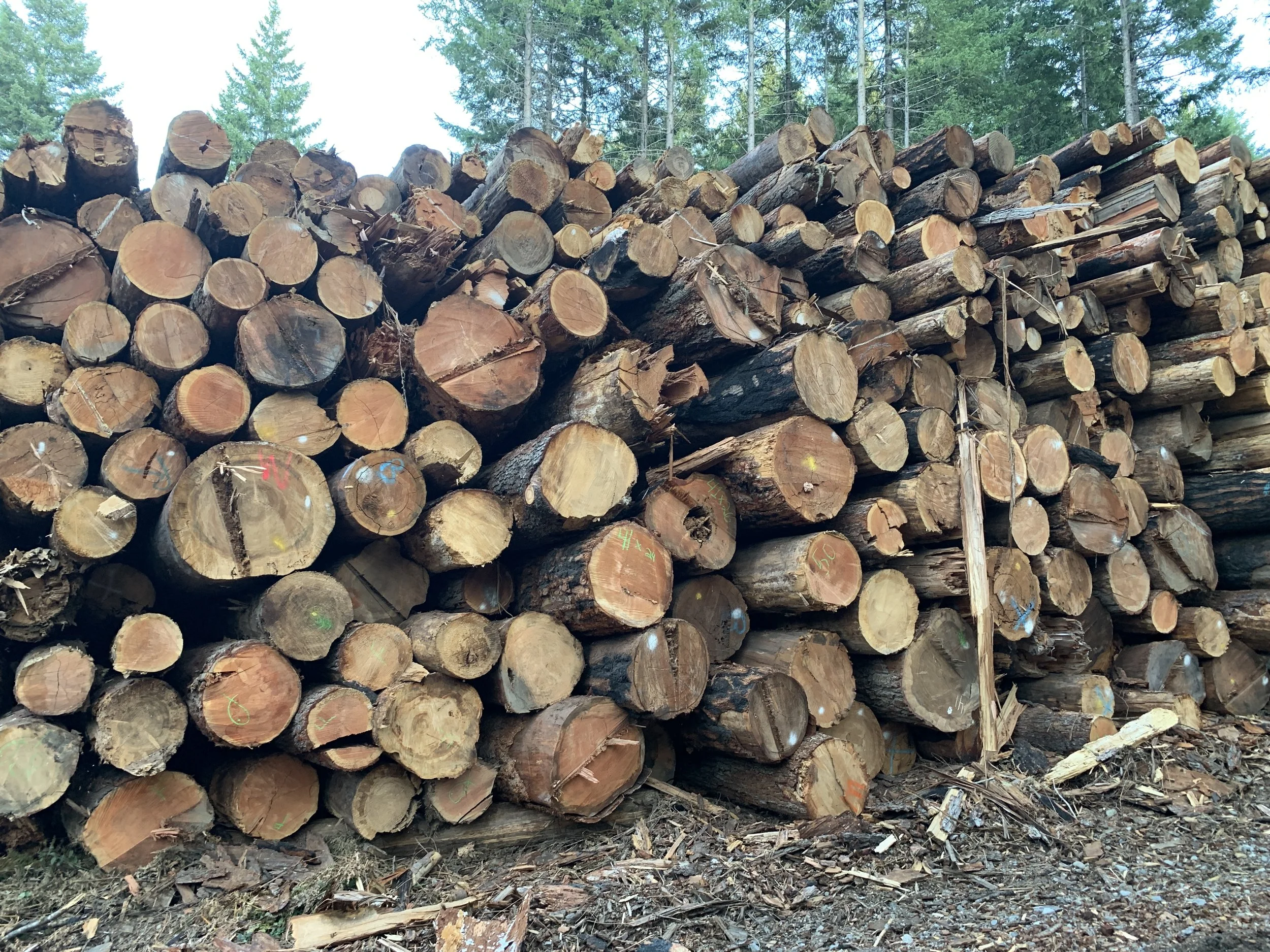
Large logs 2-4 feet in diameter are piled 20 feet high
The roadside clearcutting does make a huge difference to the aesthetics and ecology of the landscape, amplifying the impacts of old logging roads that were decrepit, degraded, and spilling sediment into streams that are now fully exposed after stripping the snags off the slopes. It might have been better to simply side-fall the snags and leave them lying there rather than drag them to the roads, initiating gulley erosion in the skid tracks. Those big logs could have served as check-dams for retaining sediment, as well as add organic matter to develop future soil. All the logging slash left behind will provide some nutrients, but coupled with all the grasses, shrubs, and invasive weeds that are growing in the new sun-exposed sites will greatly increase wildfire risks and fuel hazards. Rather than fuelbreaks these linear clearcuts along "treated" roads will become quick-burning fuses for future wildfires that will be even easier to ignite and faster to spread flames.
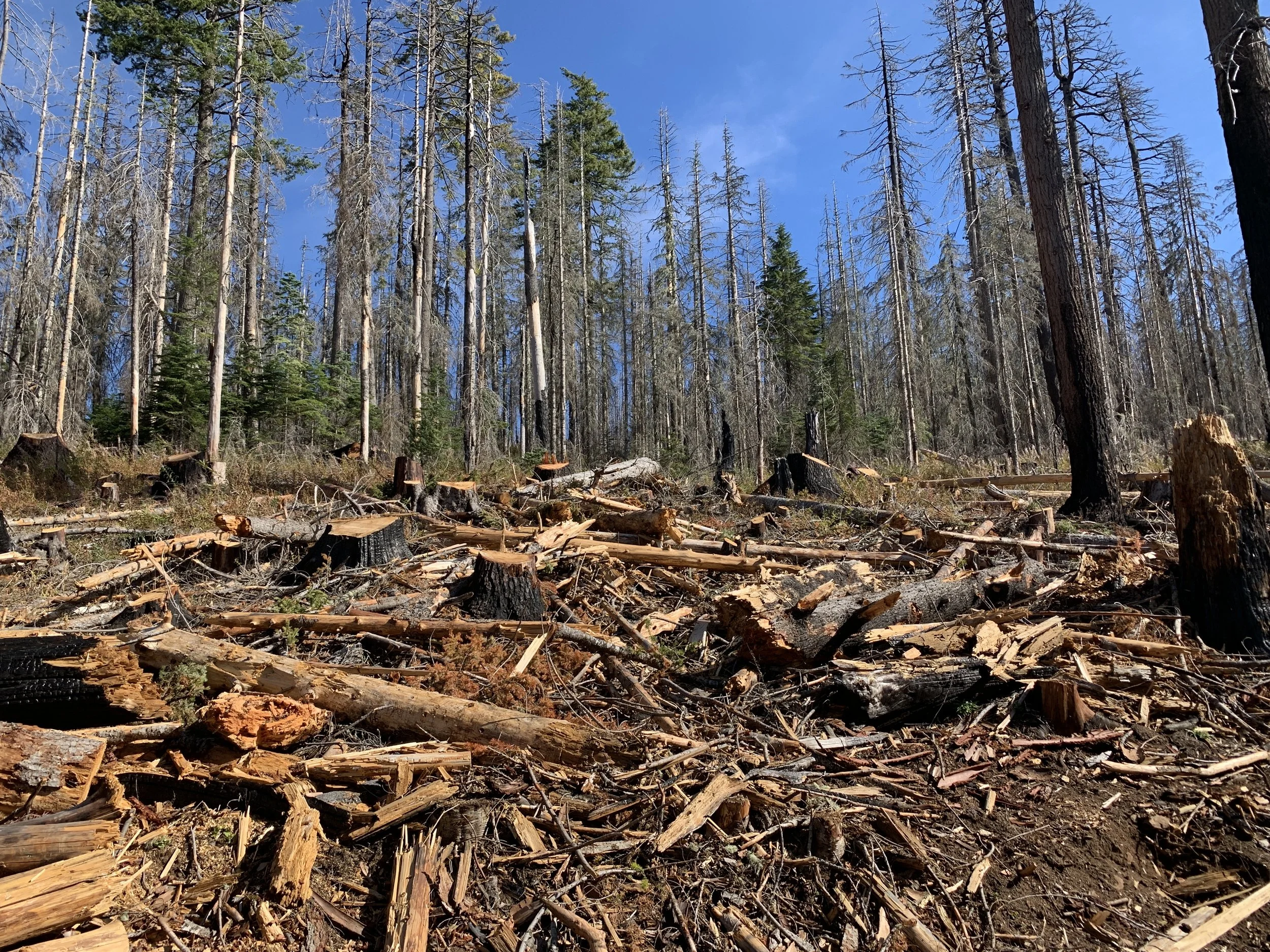
Logging removes low-hazard large trees while dumping loads of high-hazard logging slash as fuel for future wildfires
As a nightmarish glimpse of the potential impacts of the Trump Administration's rescinding of the Roadless Rule and opening up roadless areas to new road-building and new logging, the scene from Warner Creek provides a warning of more destructive post-fire management to come. When logging roads erode, there are many things we could and should do to mitigate the ensuing environmental damage, particularly to waterways and fish habitat. But rogue roadside clearcutting of giant snags is not one of them.
Be aware and beware: new clearcutting of old logging roads could be coming to a burned forest near you!