
Failed National Park Proposal Could Have Displaced the Manhattan Project
Just about anyone who lives in the Los Alamos area recognizes the stunning scenery that we live among daily. Who can ignore the view from the Main Hill Road, looking at the beautiful cliffs, canyons, and distant mountains? But how many people know that there was a big movement to create a new national park in the Los Alamos area before the Manhattan Project?
Between 1905 and 1930, various bills in Congress would have created a national park in the Los Alamos area. Had the bills passed, the Manhattan Project and LANL likely would have been located elsewhere.

Fire Hiring
We have a National Strategy for updating our response to ever-hotter wildfires. With years of learning, careful consultation, and consideration, the Cohesive Wildfire Strategy offers a chance to respond to climate change and its effect on wildfires. But will personnel problems in our federal agencies sabotage the National Strategy?
Driven by the FLAME Act of 2009, the National Strategy gives energy and coherence to fire management during climate change. Inherent in this national strategy is an assumption that governments on all levels can hire a skilled workforce to respond to fires in ever more creative ways over the next few decades.

Doing What (Be)Comes Natural: Cut, Pile, Burn
On some snowy February days, I drove from my cabin, crossed the Rio Grande Valley north of Santa Fe, and joined other firefighters at sunrise in an icy, snowy place in the Jemez Mountains. I’m used to working on fires in the spring, summer or fall, but here we were with layers of warm gear under our fireproof clothing, blowing into our hands and standing in the sun when it finally came up. Then we set out to burn piles of slash on a snowy slope, deep in the Valles Caldera National Preserve.

USFS Launches Northwest Forest Plan Amendment
The U.S. Forest Service convened the first meeting of a Federal Advisory Committee (FAC) in early September to work on an amendment of the Northwest Forest Plan (NWFP). Covering 17 national forests in 3 states, this is one of the most ambitious planning projects the agency has initiated in years. The agency wants to modernize the 30 year old NWFP by developing new strategies for dealing with climate change and wildfires, and engaging Tribal communities and Indigenous perspectives that were largely excluded from the original plan.
FUSEE's program director for the FireGeneration Collaborative, Ryan Reed, serves on the 21-person FAC as the sole designated "public" representative. Ryan is an Indigenous fire practitioner and wildland firefighter, and is the youngest member ever to serve on a FAC.

Oregon Landowner Brings Good Fire Back to the Forest
Rich Fairbanks knows what a healthy forest looks like, so when he and his wife bought forested land in the Little Applegate Valley in Southern Oregon in 2003, he started making plans to bring fire back to the land.
“These forests historically saw fire, on average, about every six to ten years” said Fairbanks. Rich holds a M.S. in Fire Science, is a founding FUSEE Board Member, and has semi-retired after a 32 year career with the Forest Service.
“Since 1911, we have been suppressing fires to the maximum extent possible” Fairbanks adds. This has decreased biodiversity, allowed more fuel to build up, and led to higher intensity fires.

Elers Koch: Early Architect of USFS Firefighting Mission; Early Prophet of Mission Failure
In 2023 when megafires erupt across North America, and our national forests seem trapped in an escalating yet faltering war on wildfire, it might be good to look back on history and see how we got here. How did firefighting on public lands get started? What was US Forest Service firefighting like back in 1905 or 1920? How are those roots relevant today?

Biden’s “Burn Back Better”
“The United States has a vast area of public forest that needs to burn. Wildfires chip away at these hundreds of millions of acres of decadent forest every year. Still, nationally the area that needs to burn to restore wildlife habitat and protect towns is staggering. Finally, the Biden administration

Changing Fire's Story from a Source or Symptom of the Climate Crisis to One of its Solutions
“Since it was first sparked on land 420 million years ago, fire has played a major evolutionary role in ecosystems and human societies. Indigenous peoples used fire to nurture habitats for a wide diversity of species that provided them with foods, fibers, and medicines, and their cultural burning protected their villages from unwanted wildfires.

Question Suppression: Getting the Whole Story about Fire Suppression Operations
“Question Suppression: Getting the Whole Story about Fire Suppression Operations” is a tipsheet for reporters who cover wildfire designed to aid them in asking the hard questions. It offers advice and examples to uncover how the fire is actually being managed.
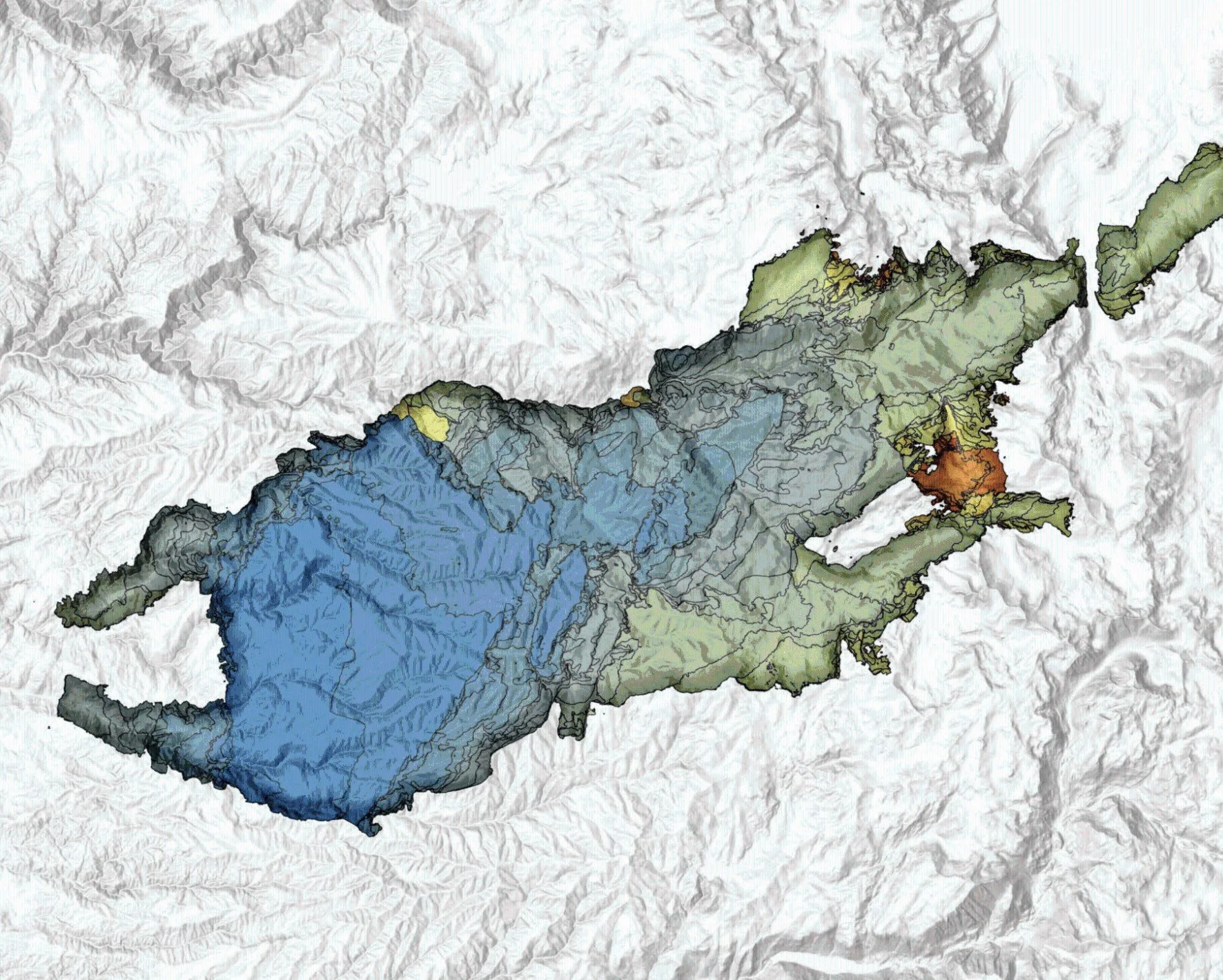
Caldor Fire Story Maps by Courtney Kaltenbach and Maxwell Spiegel
“I’ve never seen a retardant drop successfully contain fire spread and I often see areas of burned forests coated in powdery pink retardant that I know is going to seep into the soil and poison the areas watershed. Aggressive fire-suppression tactics are becoming more futile and more dangerous in the face of climate change. The impacts of the Caldor Fire on Lake Tahoe is an illuminating example of the harm of fire suppression.”
Check out the story map below to learn about the suppressive firefighting tactics used during the 2021 Caldor Fire and their impacts on Lake Tahoe and the surrounding area.

Fire as the Essential Tool: Remembering to Celebrate Success
Looking at the Washburn Fire, there have been dozens of iterations of prescribed burning, thinning, and pile burning around the Mariposa Grove of Giant Sequoias and the nearby community of Wawona. In addition, the park has since the 1970’s had a program of allowing some lightning caused fires to burn. Both the human community of homes and infrastructure that comprise Wawona and the natural community of giant sequoias have benefitted from a single program of work – return fire to the extent possible to fire-dependent and fire-adapted landscapes.
FUSEE welcomes new crew members
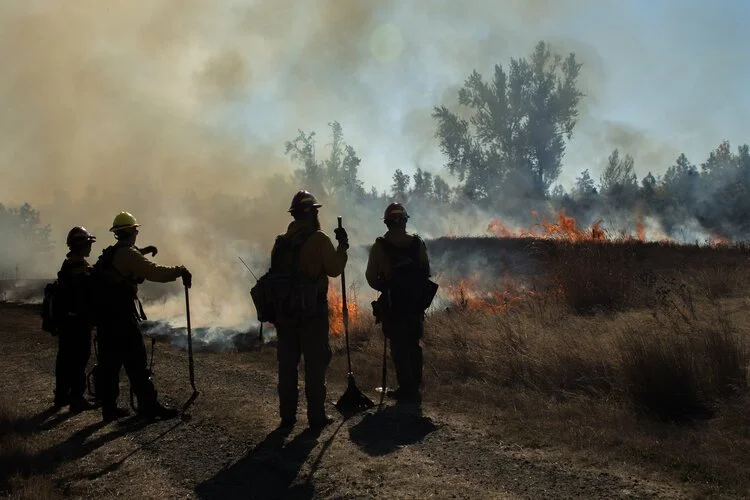
Thanks to generous donors and the shifting cultural fire attitude around fire, the FUSEE crew is growing! We have recently welcomed more torchbearers for the new fire paradigm - an Administrative Director and two summer interns.

We Owe the Forests Good Fire
People owe the forests and wildlife restoration. We owe the natural world the best of our knowledge to restore the land to a resilient state that will support the maximum populations of diverse plants and animals and give generations of people beautiful places to find solitude, beauty, knowledge, adventure, recreation and spiritual sustenance.

Safety is more than a 5-minute talk. Keep close contact with your community too.
Despite worsening drought, longer seasons, increasing job vacancies, and increasing fire behavior it always seemed that tragedy could never hit me or anyone close to me. We are too smart. Too tough. We pay attention. We know what we are doing. Well, turns out that there are a lot of things out of our control.

Wildfire Guidelines for Archaeologists (USFS)
This document briefly synthesizes some of the technical information available on the effects of fire on cultural resources. This synthesis should assist cultural resource specialists with their contributions to fire management planning, compliance for prescribed fire projects, and participation in wildland fire use or wildfire events.

Labor Day Fire Analysis
In September 2020, Oregon experienced the most extreme wildfire event in the state’s history. In a matter of days, the "Labor Day Fires" ripped across vast swaths of public and private forestland on the westside of Oregon’s Cascade Mountains—a region that rarely sees widespread fire activity. Thousands of homes were lost, numerous people died, and over 10% of Oregon’s population was placed on some level of evacuation notice. Now that the smoke has cleared, researchers from around the region have begun to study the event to draw lessons about wildfire behavior under extreme weather events. Our team initiated this research project in November 2020 to drill into the following question: How do fuel conditions (and associated forest practices) influence wildfire behavior during extreme weather events?

Good Fire: Current Barriers to the Expansion of Cultural Burning and Prescribed Fire in California and Recommended Solutions
In 2020, over four percent of California burned in wildfire. Over 30 people lost their lives in the fires; experts estimate an additional 3,000 premature deaths may have resulted from wildfire smoke. Property damage is expected to top $10 billion.
Leadership in Forest Management
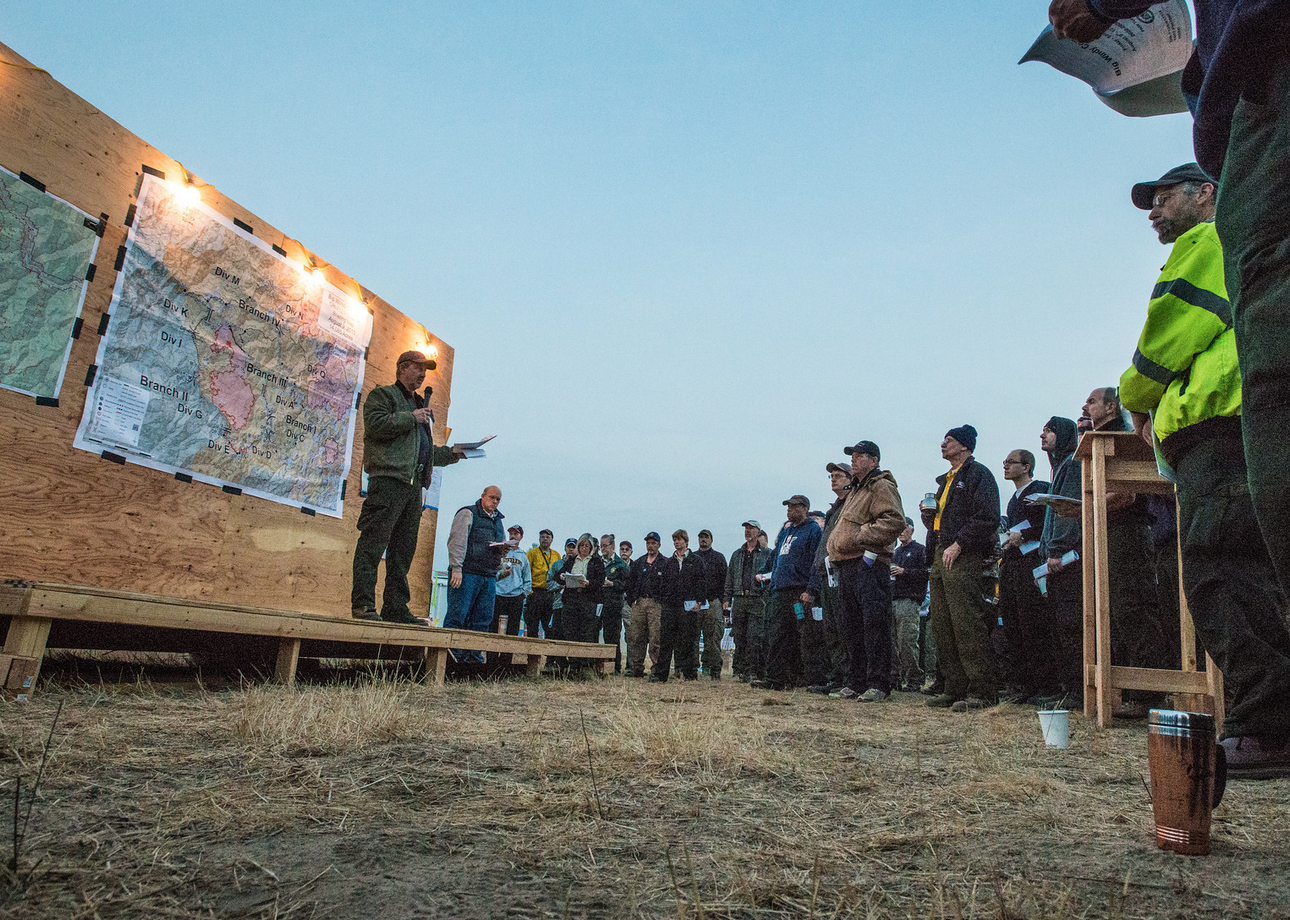
Leadership. It's a simple word that can be as complex as an August lightning bust. Its principles are beaten into individuals and organizations, but they're only as useful as the person who cares enough to think about how to apply them.

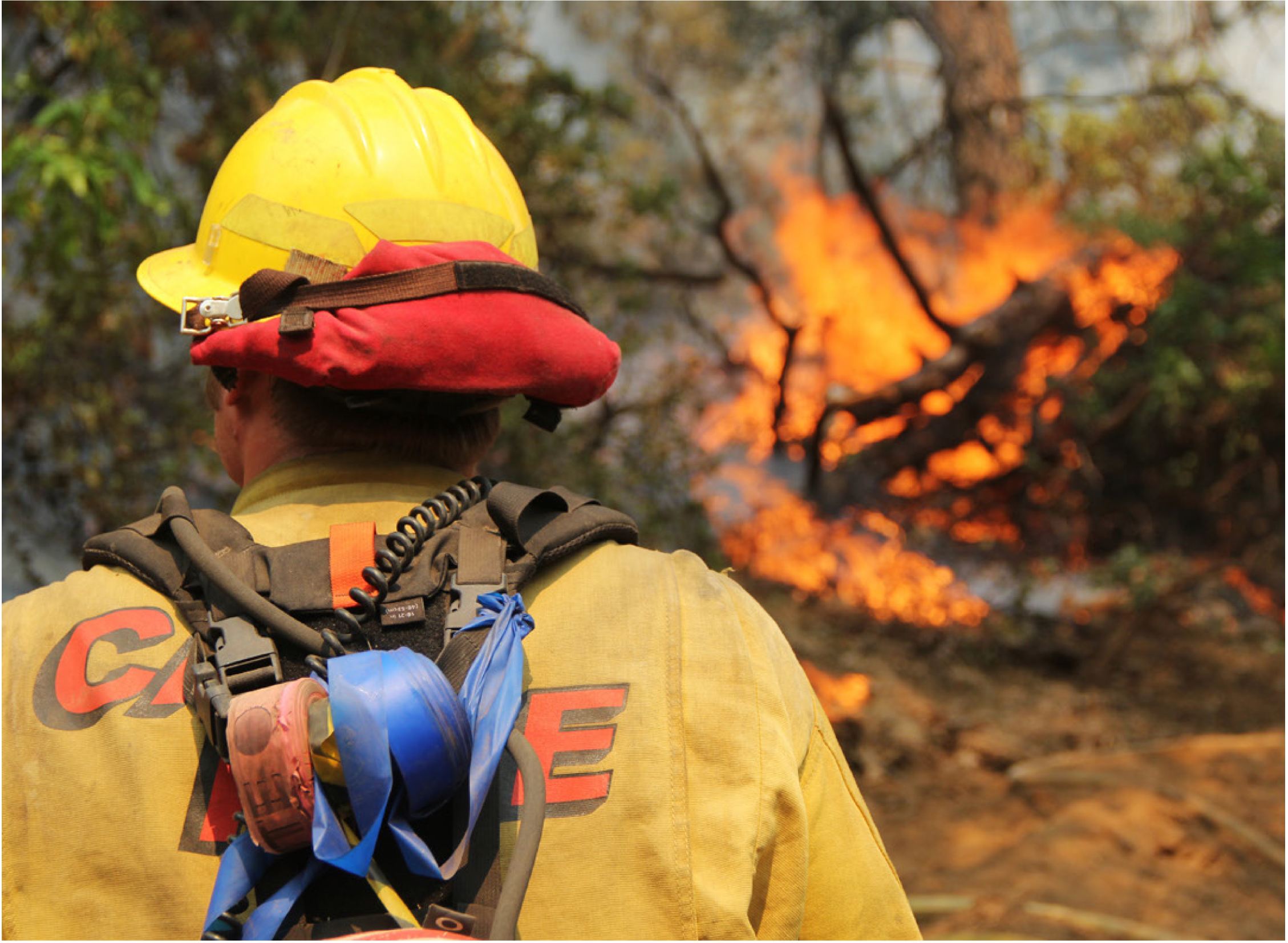
FireWatch Part 4: A Guide to Online Wildfire Information Gathering of CalFire Incidents
Learn how to monitor CALFIRE suppression operations to document its costly and destructive firefighting actions on private and state lands.