
Press Release: Wildland Firefighters Oppose Removing Roadless Area Conservation Rule
Fire Engine Crews Reject New Logging and Roadbuilding in Roadless Wildlands
For Immediate Release: Thursday August 20, 2026
For more info: Timothy Ingalsbee, FUSEE Executive Director, fire@efn.org, 541-338-7671
Carson States, Engine Boss, carsonfire19@gmail.com, 458-234-7405
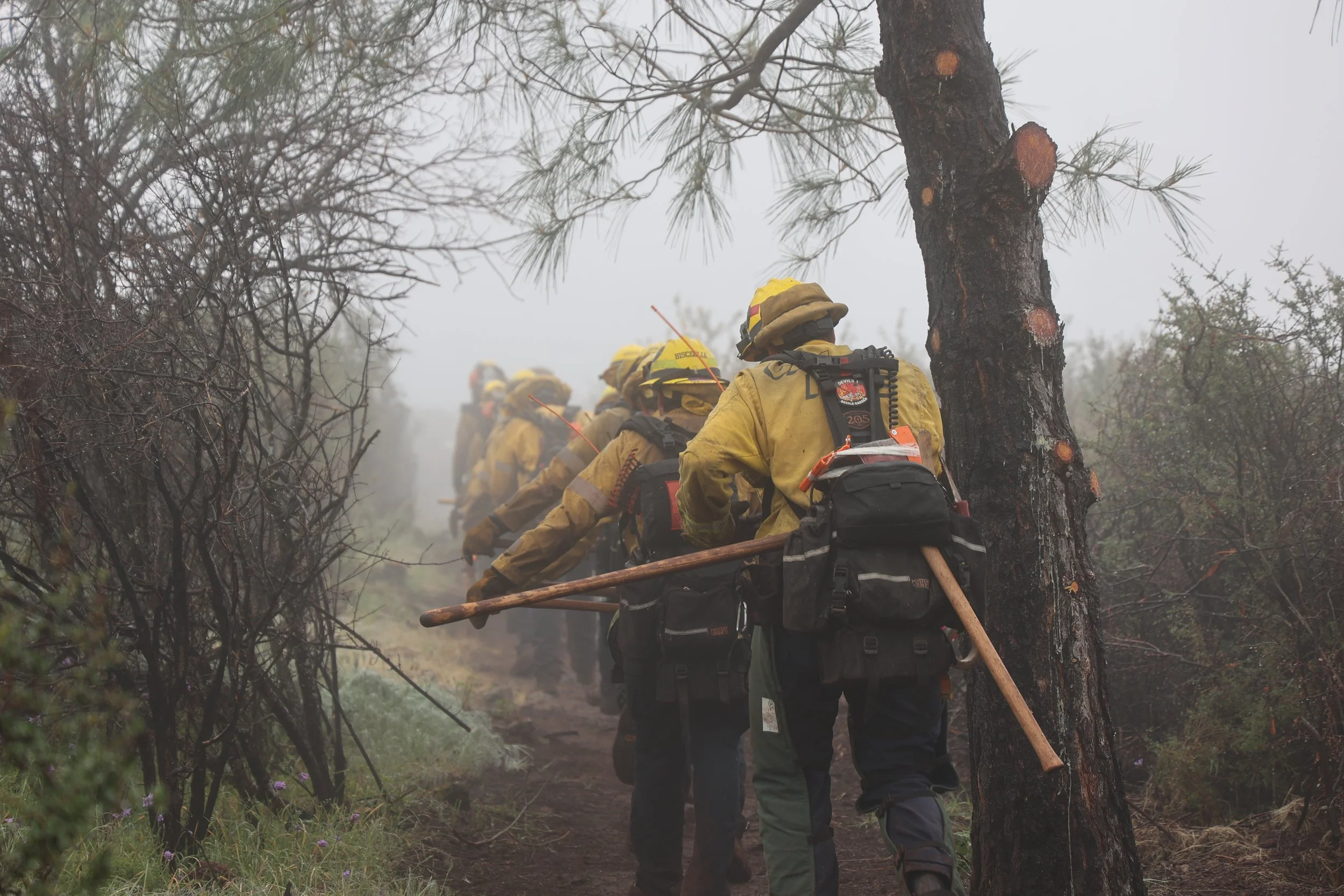
CAL FIRE Crew. 2026
EUGENE - Firefighters United for Safety, Ethics, and Ecology (FUSEE) released statements from wildland firefighters who currently serve on engine crews who oppose the Trump Administration's proposal to rescind the Roadless Area Conservation Rule ("Roadless Rule"). The Administration claims that roadless area protections impede wildfire suppression and that building new logging roads will help prevent wildfires by improving firefighter safety and efficiency. Engine crew members refute this claim, offering several reasons from their personal and professional experience why typical Forest Service logging roads present hazardous conditions for transporting and staging firefighting crews. The firefighters argue that aviation-supported handcrews are better suited to manage fires in rugged roadless terrain, and the absence of human communities or critical infrastructure in roadless wildlands provide more opportunities to safely manage fire in order to restore landscape wildfire resilience.
"Constructing new logging roads into roadless areas will increase human-caused wildfire ignitions by careless recreationists, criminal arsonists, or simple accidents," said Carson States, a 10-season veteran firefighter and Type 6 engine boss from Oregon. "More roads mean more fires, so the broadened access to a wildfire incident will be undermined by the increased number of wildfires that will need to be suppressed."
Research has shown that the majority of wildfires are human-caused, and the majority of those fires are ignited within 50 meters of a road. Expanding road access for human-caused wildfires to ignite will greatly add to the burden, risks, and hazards that are challenging firefighters.
"We have over 100 years of experience developing aviation-based firefighting assets that provide crews speedy access to wildfires and can fully equip them in remote unroaded areas," said Brandyn Harvey, a 30-year veteran firefighter including seven seasons as a smokejumper who is now an engine chief. "We don't need to waste taxpayer money on building and maintaining new logging roads when flying and hiking in suppression crews and equipment is better suited for the rugged terrain in roadless wildlands anyway."
The Roadless Rule does not prohibit fire suppression, and use of smokejumpers, heli-rappelers, and helitack crews have long been used to suppress or manage wildfires and large-scale prescribed fires in roadless areas. The growing use of satellites, aircraft, drones, and communications technology offer ample capacity to supply crews with needed transportation, data, tools, equipment and supplies.
"There are already a ton of roads through the national forests that are impossible to drive on without bucking downed logs for hours," said Anthony Perez-Orozco, engine crewmember with the Forest Service in central Idaho. "The poorly maintained condition of most existing logging roads make engines seldom used for initial attack."
There is a current backlog of road maintenance on National Forests costing over $8.6 billion. The costs of maintaining a greatly expanded road system in steep, rugged, and unstable terrain in Roadless Areas will inevitably add billions more in both construction and maintenance costs.
"Wildland fires are necessary and incredibly significant ecological processes. Roadless areas lack much infrastructure or human structures, so they offer opportunities to safely, economically, and ecologically manage fire across large areas without threatening human assets," said Molly McGuire, a former engine crewmember currently working on a Wildland Fire Module. "I do not believe that repealing the Roadless Rule will be ecologically beneficial or reduce wildfire risks to lives and property."
Wildland Fire Modules are highly-trained and technologically-equipped crews of 7-10 people whose primary purpose is to maintain fire’s role as a natural ecological process. They are very versatile and can alternate from fire suppression to fire use actions as the environmental conditions or management objectives require. They are ideally suited for managing fire in roadless areas.
"Thousands of miles of existing Forest Service logging roads reveal what new roads will be like: narrow, winding, washboard-rutted gravel roads littered with fallen rocks and logs, and lined with flammable brush and invasive weeds. Just the dust plumes kicked up by vehicles driving these crumbling gravel roads make them nightmares for initial attack engine crews trying to rush to flames," said Timothy Ingalsbee, Executive Director of Firefighters United for Safety, Ethics, and Ecology (FUSEE) and former initial attack engine crewmember for the U.S. Forest Service. "Logging roads are designed for resource extraction, not wildfire suppression, and the Administration's goal to remove the Roadless Areas is to get the timber, ore and oil out, not put fires out."
For more info: Timothy Ingalsbee, FUSEE Executive Director, fire@efn.org / 541-338-7671
Carson States, Engine Boss, carsonfire19@gmail.com / 458-234-7405
Download the PDF of this Press Release here: FUSEE Firefighter Roadless Rule Press Release.