A Window Into the World of a Firefighter’s First Roll
by Addison Sobotta, FUSEE Volunteer & Environmental Advocate
This last summer, I had the privilege of being the first person to see my friend, Lord (yes, like a medieval lord), after he completed his wildland firefighting training. The look in his eyes as he slumped into the passenger seat was one that only somebody who had also spent 16 hours per day lugging gear through the woods could replicate. Yet, somewhere behind the glaze of exhaustion, I saw true pride within him—a fire, you could say—in a way that I hadn’t seen before over our years of friendship. Now, on the other side of his first roll, I can see why.
As soon as we made it back into town, we made a beeline for the Carson All-You-Can-Eat Dining Hall, where Lord’s energy seemed to replenish at rapid speed as he ate the first real food that he’d had in days. He and the crew spent extremely long hours training, including hundreds of push-ups and hiking for miles with a 45-pound pack of gear on their backs, all while fueled nearly exclusively by MREs (Meals Ready to Eat). These meals were cold, flavorless, and, despite being meant for providing the best type of fuel for a body pushed to its limits, seemed to just push Lord further to said limit. He informed me that (to put it in the most eloquent of terms) he was unable to defecate for about three days after returning home. Despite all the hardship, somehow, he couldn’t wait to get back out there.
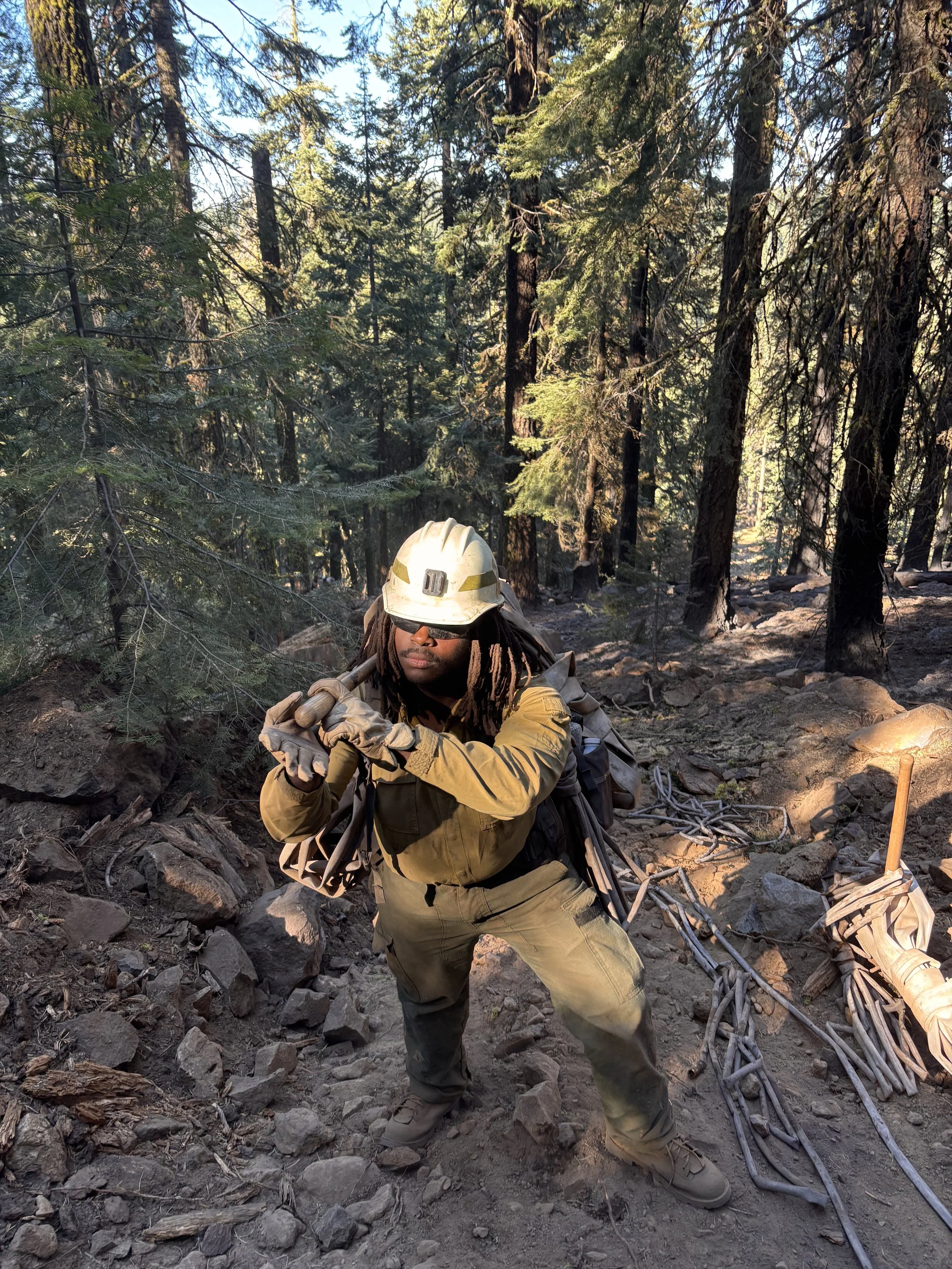
“I was definitely really nervous, you know?” Lord recalled from his first time being sent to the line. “I worked hard to get to where I was as an F2, but I was also really excited as well.” He had been eagerly waiting to put his training into action, and finally got the opportunity he was looking for when he was called in to sub for a crewmember who had been sent to a different fire. “I ended up getting on a crew who had been a crew for the entire firefighting season and, immediately when I got there, I knew it was time to lock in,” he told me. He was waking up at 5 AM each day, preparing the trucks and his gear before heading to the line to perform mop-up on any remaining spot fires. Whenever Lord retold his first roll, he always started with the instant camaraderie he felt with his new crew, despite being the rookie: “I was always taken care of, being respected, taught a lot and just shown the ropes. And I think, especially with my company, that’s the biggest thing they want: they want safety and they want people to feel comfortable being around each other.”
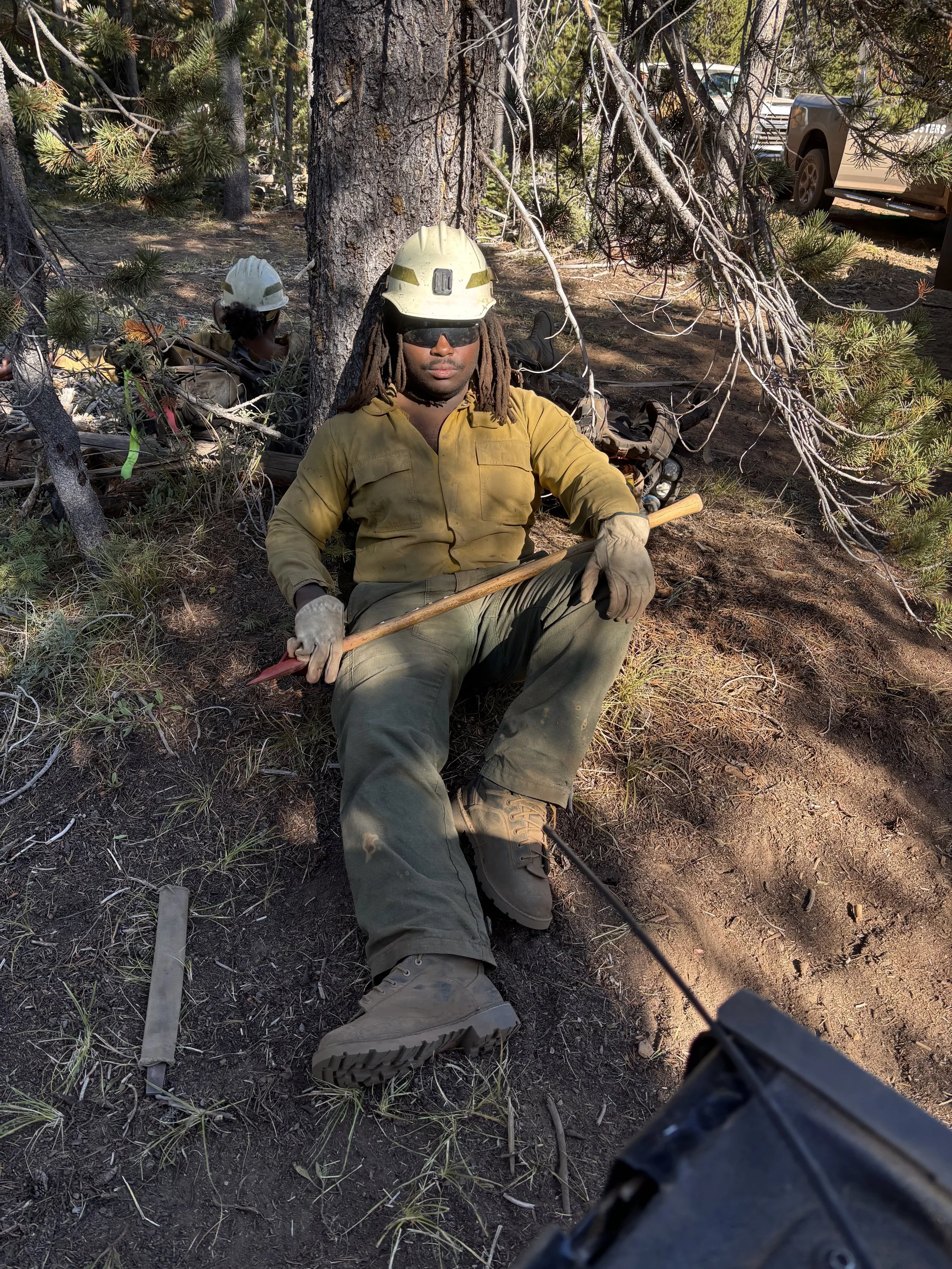
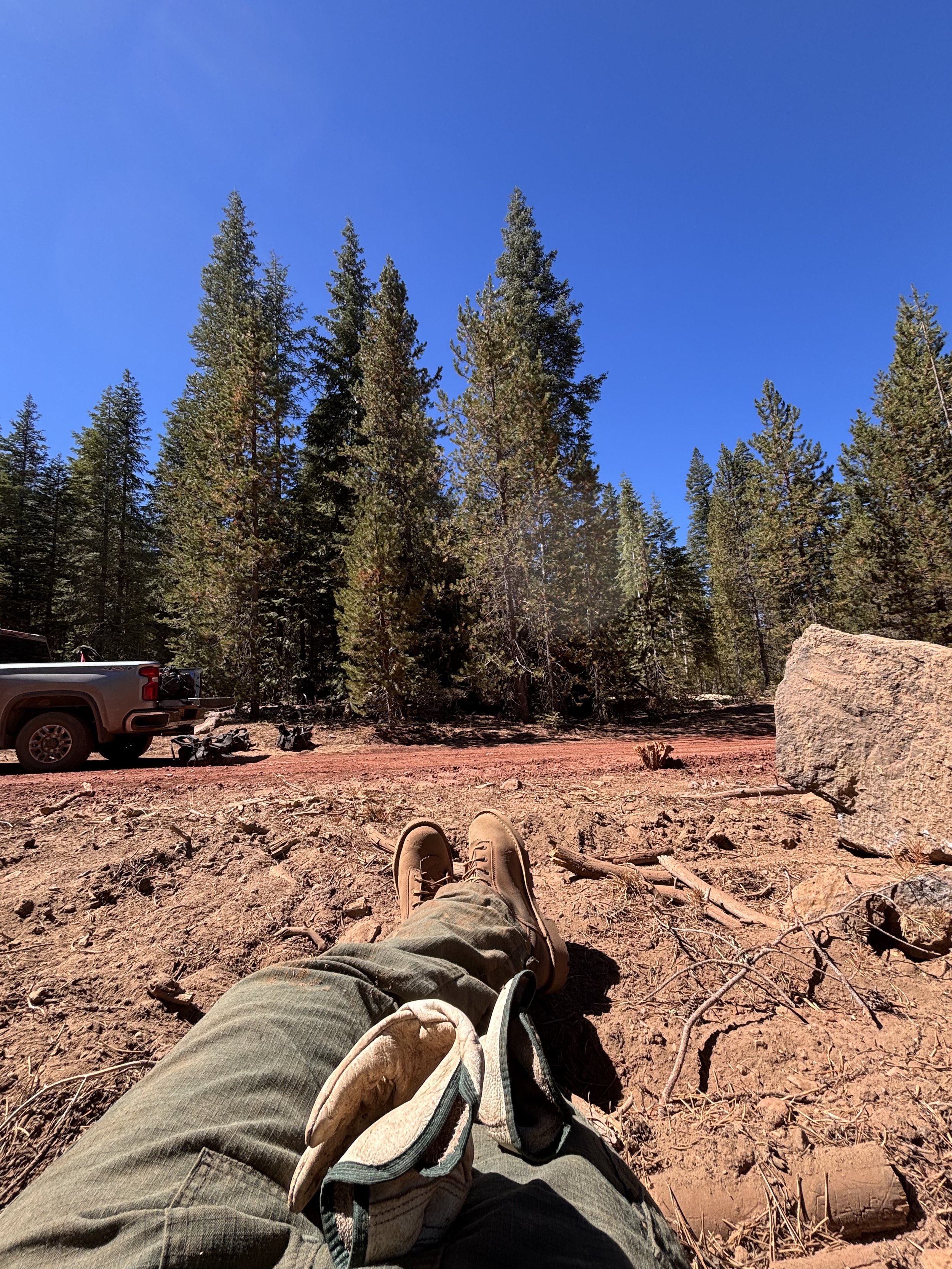
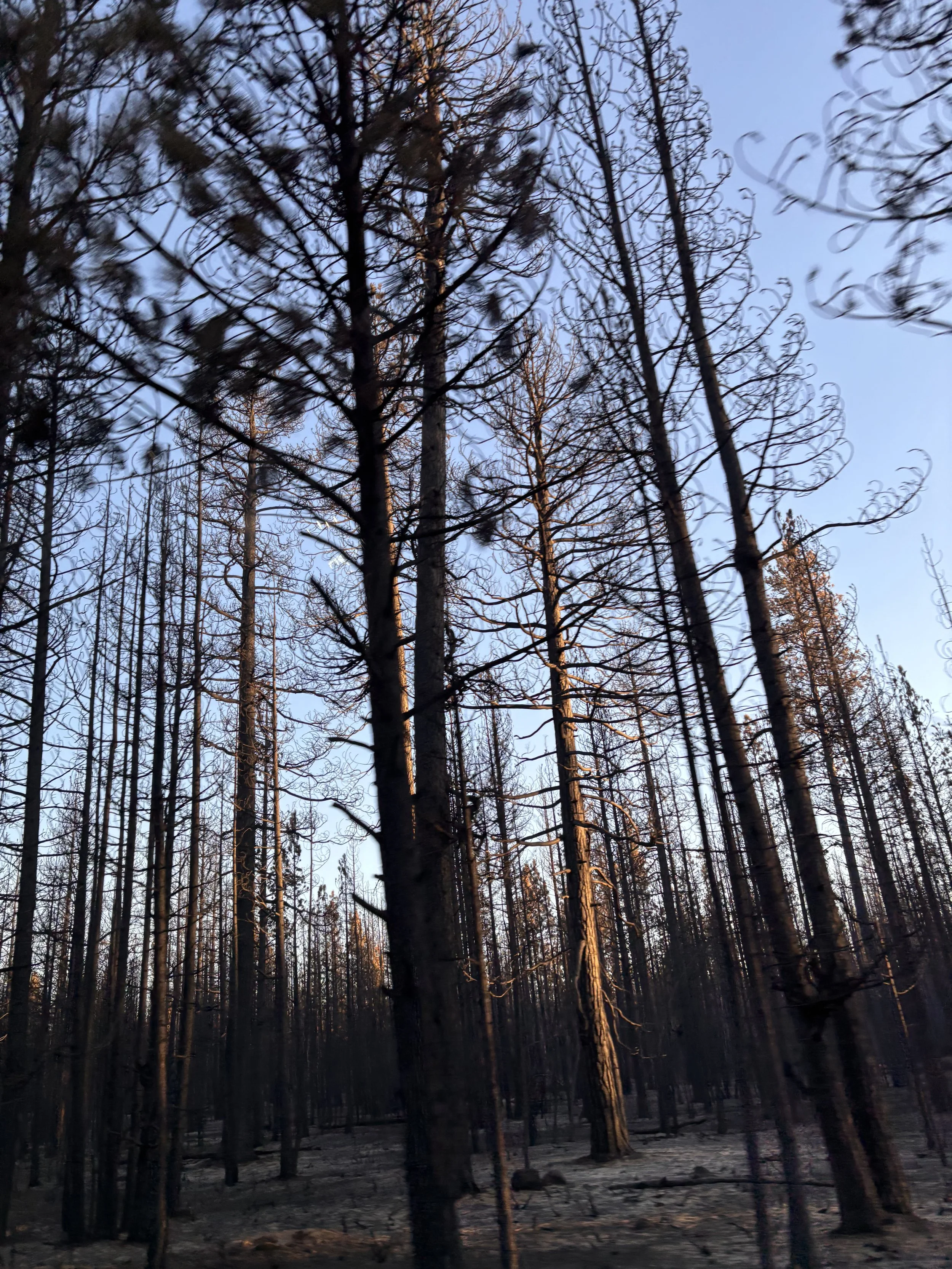
Scenes from Lord’s first season as a wildland firefighter
Back at camp, refueling after a long day’s work continued to come with challenges. Lord has celiac disease, an autoimmune condition that can cause damage to the small intestine and skin if a person with this disease consumes gluten. “You kind of have to put that aside because, you know, you gotta eat,” he told me, recalling why he decided to eat the provided food despite knowing what it could do to him. “You can’t wait for, ‘Oh, I need this to be okay and not cross-contaminated,’ because everybody else has to eat and I can’t get special requests.” Considering the high number of calories that Lord burned as he worked (work that, he says, has left him feeling exhausted and his feet in pain even a month later), eating was essential, even if it would cause other issues as a trade-off.
As many wildland firefighters know, even with the relief that comes with being able to rest, being away from the line can be one of the hardest mental challenges for those who serve in this career. Like many of those who came before him, Lord expressed how hard it was to be away from family in a dangerous area, doing dangerous work, and wondering if he’d get to go back to those left at home. At the same time, he expressed how hard it was to go from working those 100-plus-hour weeks and being treated like a hero to then go back to his regular life: “It kind of feels like Mr. Incredible when they put all the superheroes away: you’re just kind of like, ‘damn, what’s next?’” Still, Lord remains undeterred in his pursuit to help others and stick with the job that he loves.
The decision to even attempt to become a wildland firefighter is daunting, considering the extreme strain it puts on a person in every sense of the word, but, for Lord, the choice he wanted to make became loud and clear. Back in the spring, Lord got jumped in a traumatic incident where four men brutally ganged up on him, even shouting about taking his life. He took this as his chance to really think about life, and what he wanted from it. “I thought to myself: ‘There has to be more to life than drinking, hanging out with people I don’t necessarily like…’ I thought, ‘What would be the best for me? If I could do anything in the world without, you know, the expectation of anybody… what would I do?’ And I said, ‘I want to do something good for the world.’” As his best friend, I’ve been blessed with the chance to watch his passion for this job ignite. Lord has always been the type of person to truly do anything in his power to help somebody, and to give his love to anybody who needs it. I’ve seen this passion lighting his way as he’s begun his trek down this career path, and it’s obvious that helping people as a firefighter is where he is best able to take the love he has and pour it out for others. That evening after we finished at the dining hall, Lord insisted on walking back to his place with all of his gear instead of hopping back in the car, ignoring the aching that spread throughout his body in an effort to keep training himself for when he’d be called out to the line. That’s the type of action that only comes from a love of service to others, and I can’t wait to watch him keep living that love in the work he does.